
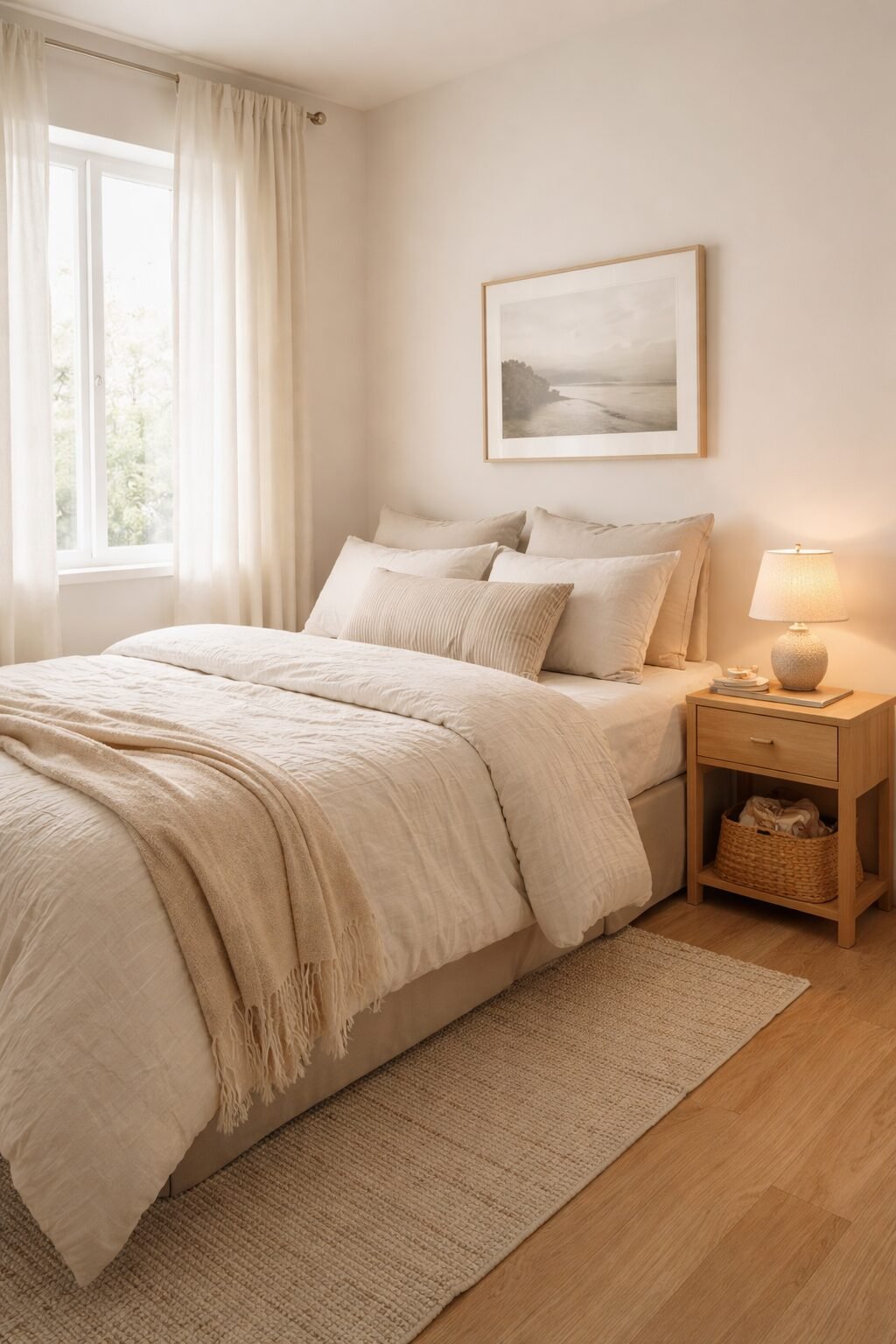
10 Fresh Takes on Small Bedroom Styling
*This post may contain affiliate links for which I earn commissions.*
A small bedroom can start feeling better with just a few thoughtful changes. The right lamp glow, softer bedding, a slim nightstand, one piece of art that actually fits the wall. Suddenly the room feels lighter, calmer, and much more intentional.
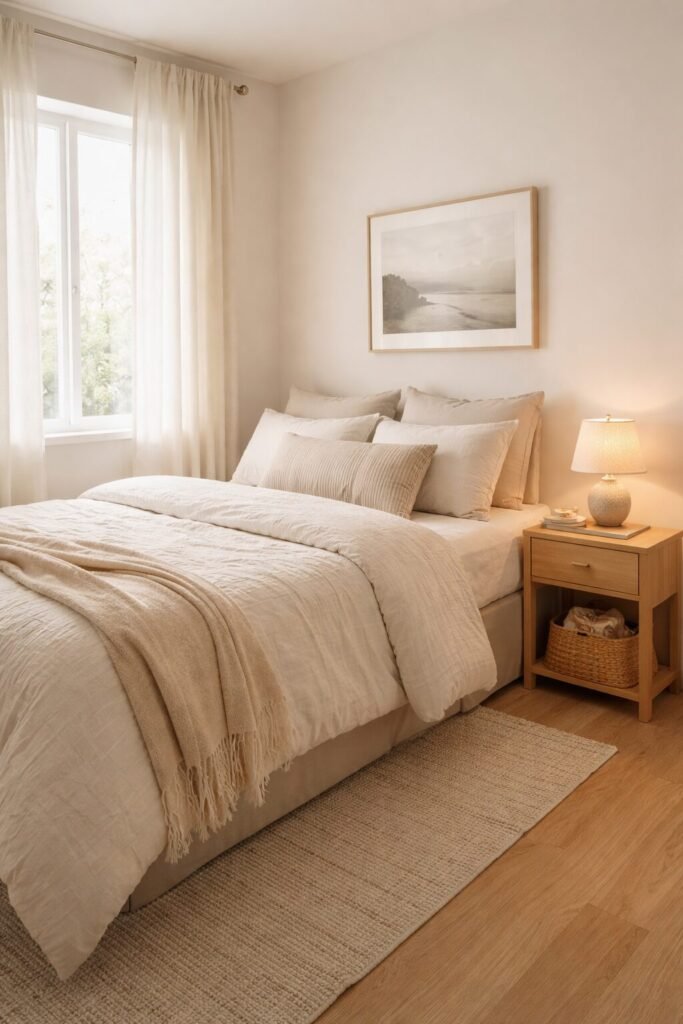
That’s the promise with small bedroom styling. You do not need more square footage. You need a clearer visual direction, a little contrast, and a few layers that make the room feel finished without feeling crowded.
These ideas are especially good for apartments, condos, and compact homes where every inch shows.
The Visual Direction
The prettiest small bedrooms usually have one thing in common. They feel edited.
Not empty. Not cold. Just clear.
That means choosing a mood before you start adding things. Maybe you want soft and airy with warm whites and pale oak. Maybe you want cozy and grounded with olive, rust, and deeper wood tones. Maybe you want clean city-bedroom energy with charcoal, cream, and black accents. Any of those can work in a small space as long as the pieces relate to each other.
Texture matters even more than color here. A linen duvet, a woven basket, a matte ceramic lamp, a lightly rumpled throw. Those details make a small room feel layered without needing lots of furniture.
Here’s the thing. In a compact bedroom, visual calm is part of the decor.
Looks to Try
1. Soft neutral with one darker anchor
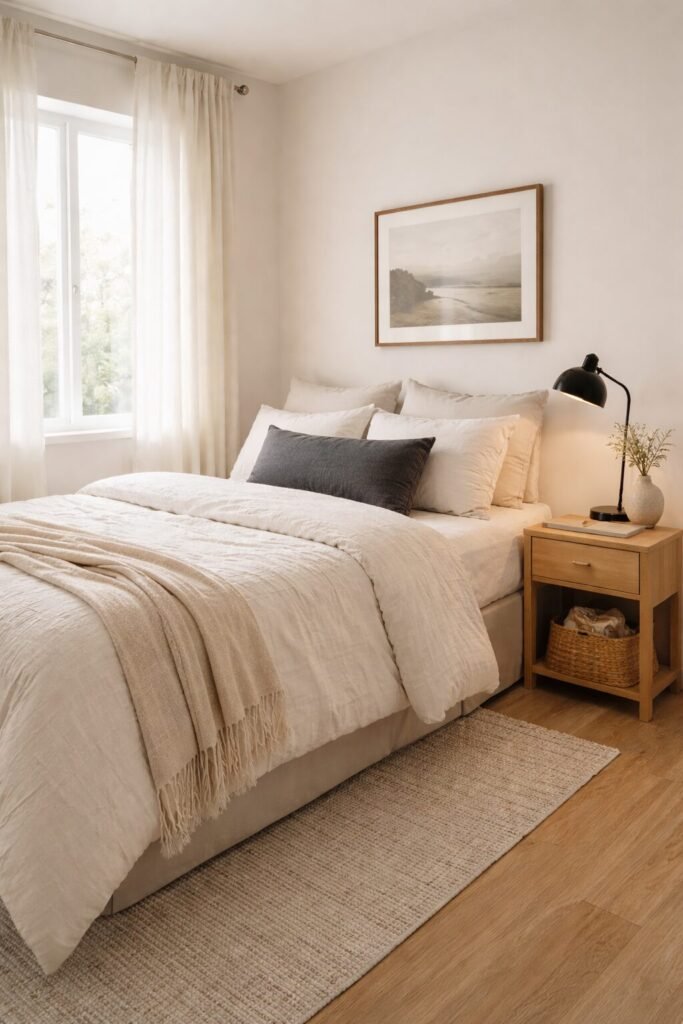
Start with creamy bedding, pale walls, and light wood if you have it. Then add one deeper note, like a black reading lamp, a charcoal lumbar pillow, or a walnut frame over the bed.
That little bit of contrast keeps the room from washing out.
Why this works
A darker anchor gives the eye somewhere to land. In a small bedroom, that makes the whole setup feel more intentional.
2. Hotel-inspired but warmer
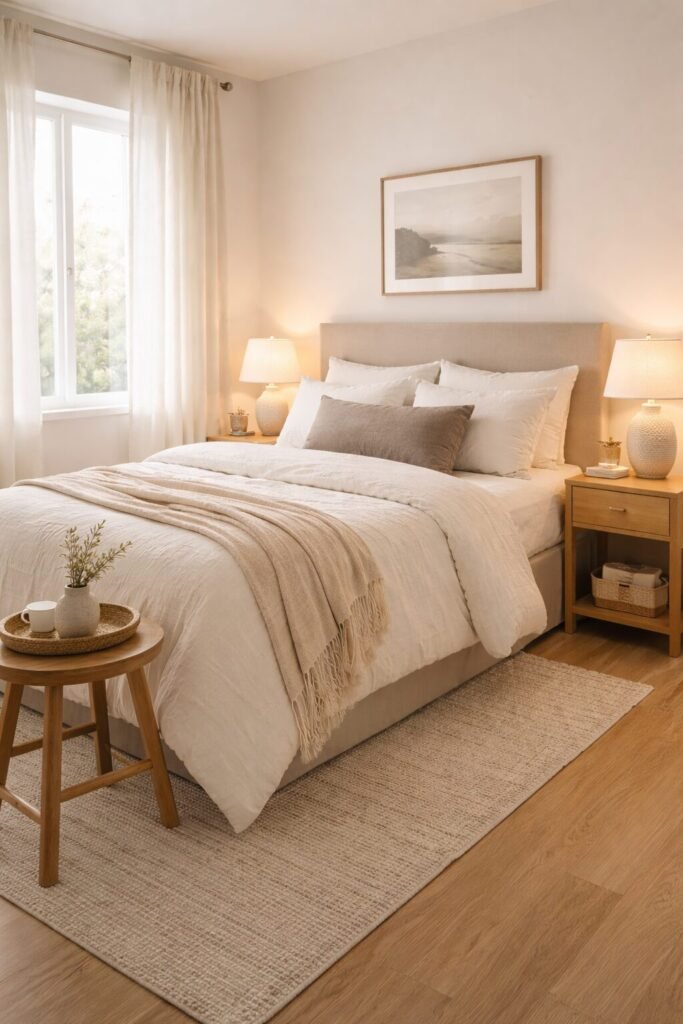
Think crisp sheets, two sleeping pillows, one long lumbar pillow, matching bedside lamps, and clutter-free surfaces. Then soften it with a knit throw, a warm beige palette, and maybe a small wood stool instead of a bulky nightstand.
This look feels polished without being too formal.
A simple choice is a tall upholstered headboard in oatmeal, sand, or soft gray. It fills the wall visually without adding visual noise.
3. Earthy tones with quiet contrast
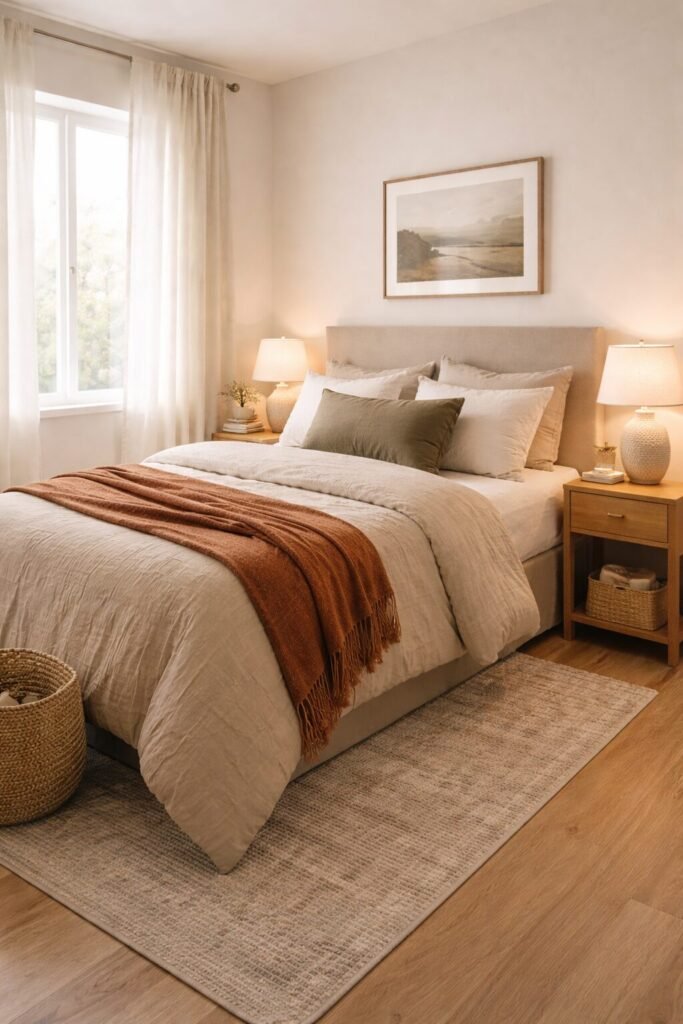
Try clay, olive, flax, and brown instead of the usual white-and-gray mix. Use these shades in bedding, curtains, art, or a rug with a faded pattern.
Even one olive pillow and a rust-toned throw can shift the whole mood.
Why this works
Earth tones make a room feel grounded and cozy. They add depth without making the space feel heavy.
4. Minimal but not stark
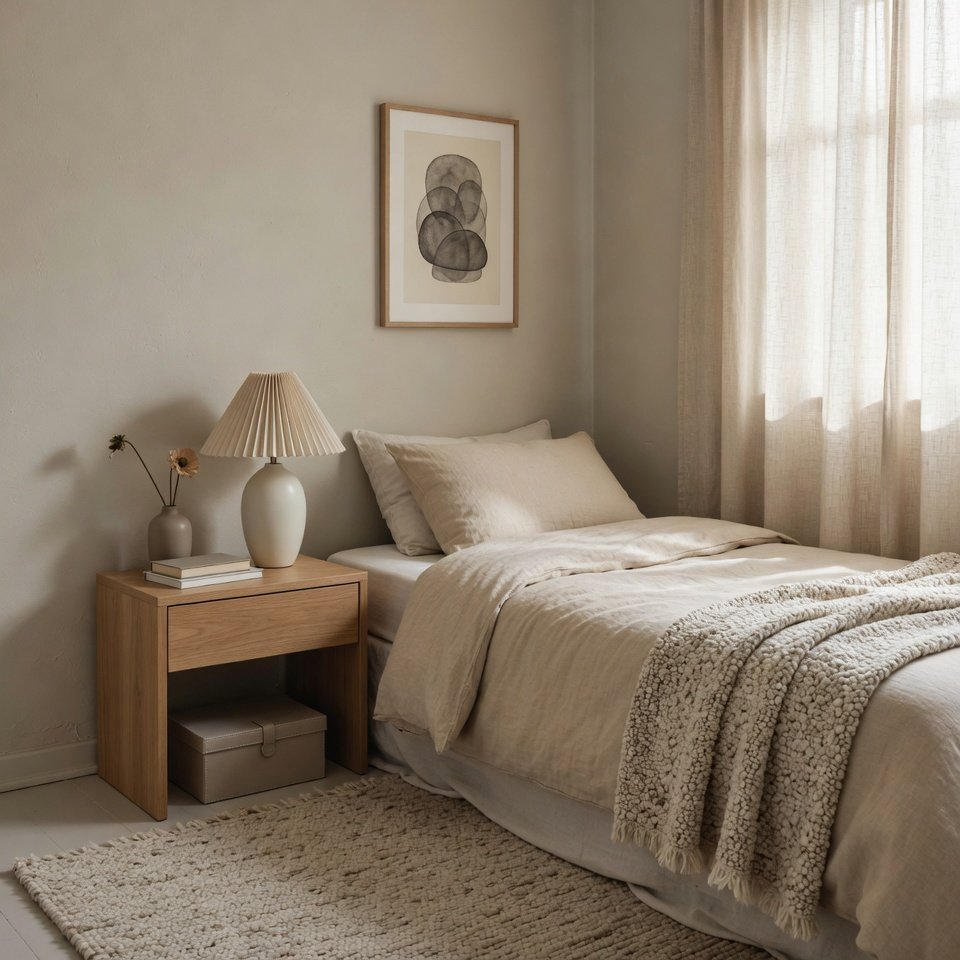
This style works well if your bedroom is very small or has awkward angles. Keep furniture slim and simple. Limit decor to a few pieces that earn their place, like a sculptural lamp, one framed print, and a small stack of books.
The trick is adding softness so it still feels lived in.
Look for brushed cotton, nubby throws, soft beige walls, or warm wood accents instead of cool white everything.
5. Layered white with lots of texture
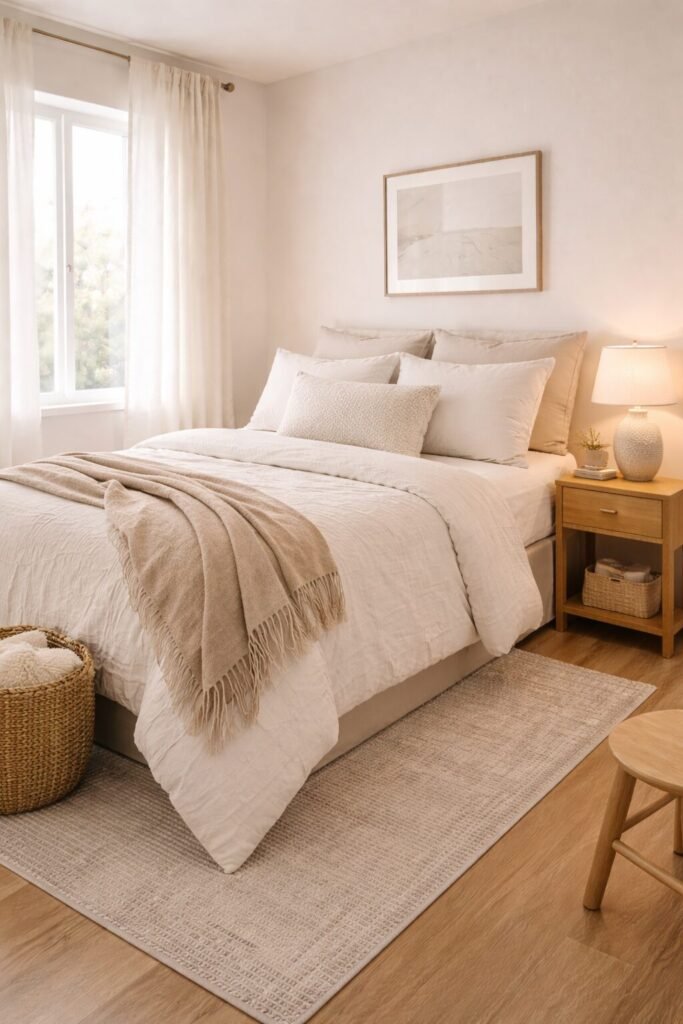
This is for anyone who loves a light bedroom but wants it to feel cozy instead of flat. Use shades of white, ivory, cream, and soft taupe, then mix in texture through quilts, pillow covers, curtains, and rugs.
A white room needs shadows and surfaces to feel interesting.
Try a puckered coverlet, linen sham, boucle cushion, and a woven basket by the bed. It all reads calm, but never boring.
6. Small-space vintage mix
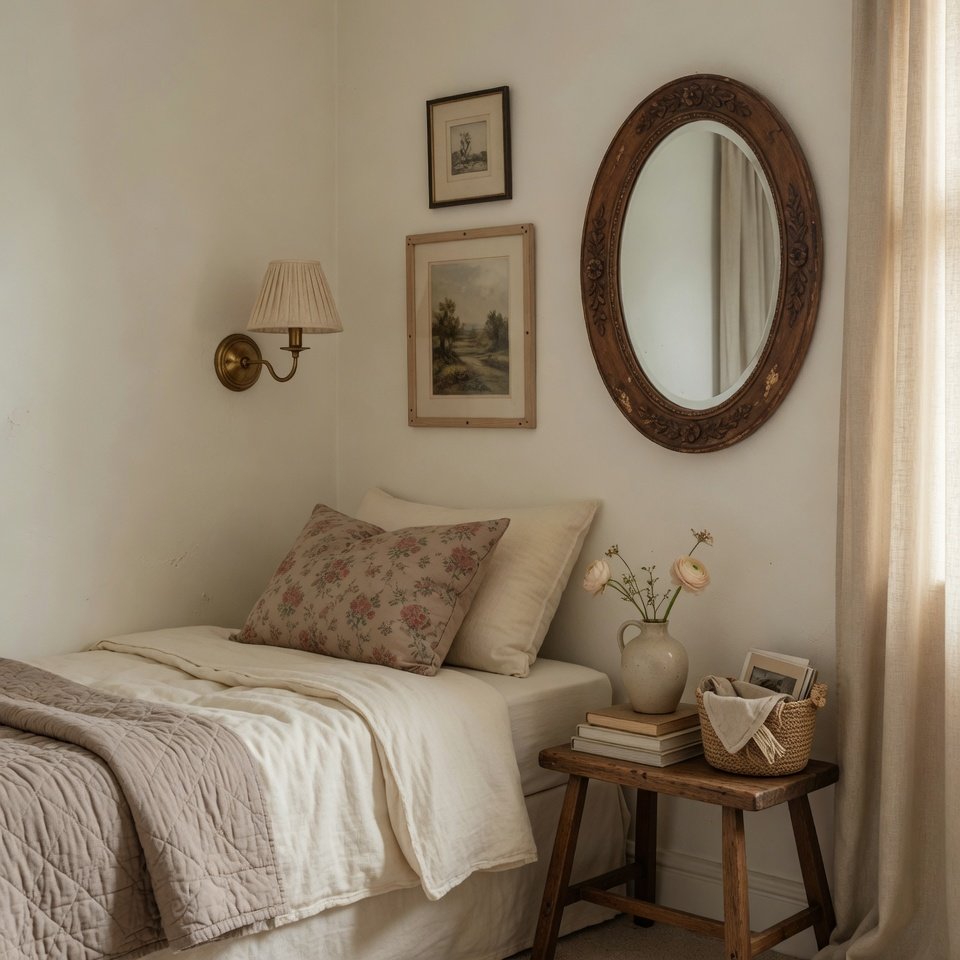
This look feels collected in the nicest way. Pair a simple bed with one or two vintage-style elements, like a brass sconce, a carved wood mirror, or a floral pillow in muted tones.
You do not need a full antique setup.
One or two older-looking pieces add character fast, especially in newer apartments that feel a little plain.
Why this works
Vintage notes break up the sameness that small modern bedrooms sometimes have. They make the room feel personal.
7. Tonal blue for a calmer feel
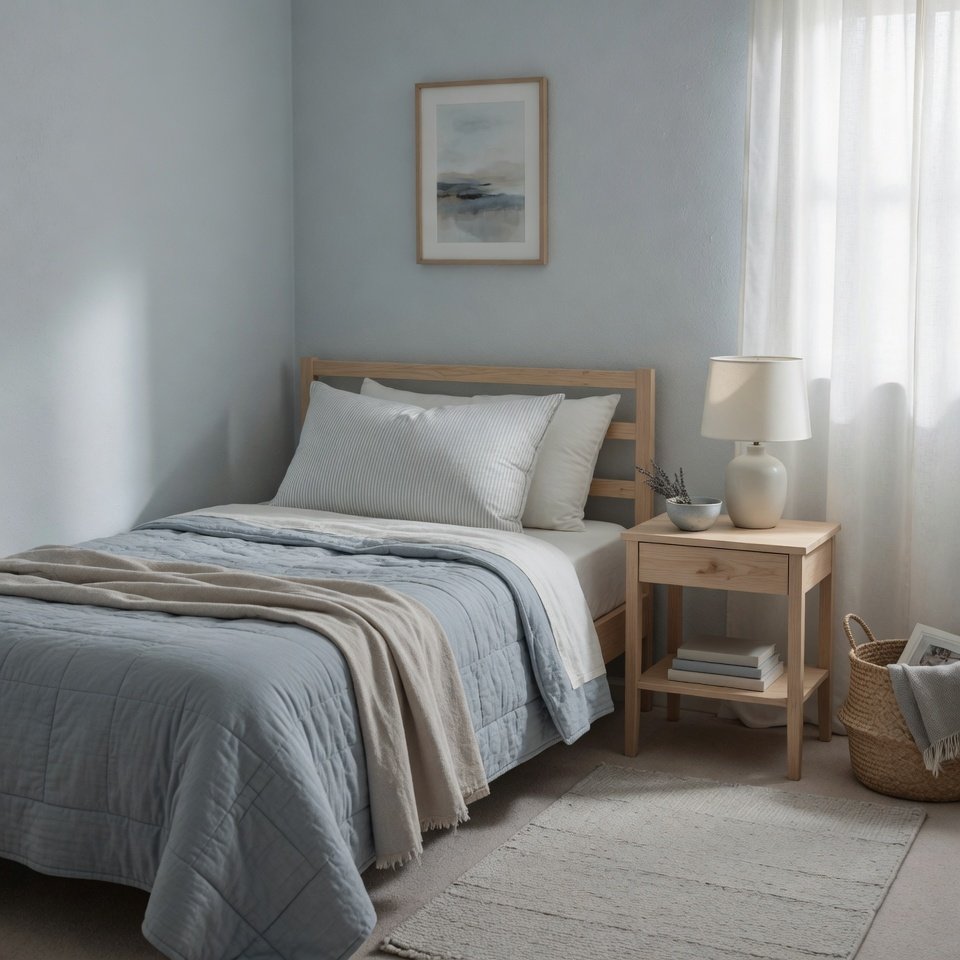
Blue can be surprisingly good in a bedroom when it stays soft and tonal. Think dusty blue, slate, chambray, and gray-blue layered together through textiles and art.
This look feels fresh, especially with white curtains and natural wood.
A simple swap like a blue quilt or soft striped pillow can create that settled, restful mood without a full redesign.
8. The cozy corner-bed setup
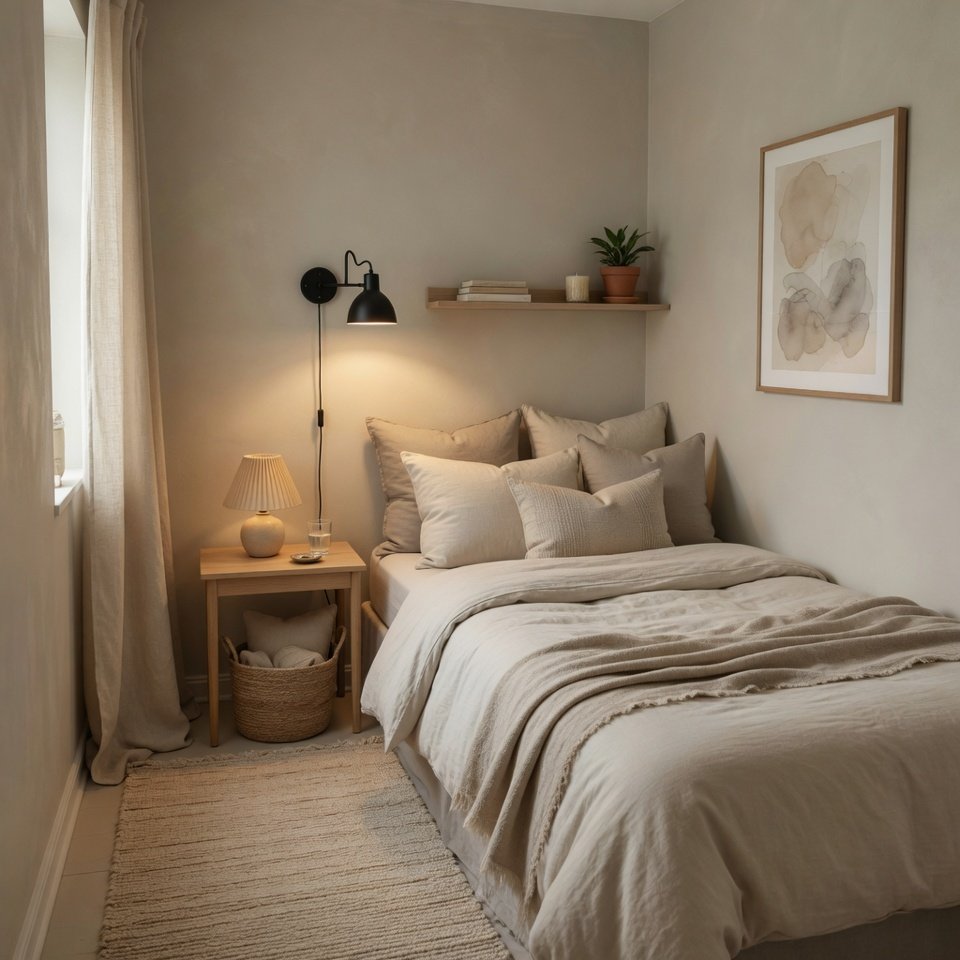
If your bed has to sit against a wall or tuck into a corner, lean into it. Use layered pillows, a wall sconce, soft bedding, and one small side table to make it feel intentional rather than like a compromise.
Add a curtain with a little drape and something vertical nearby, like art or a narrow shelf, so the bed area feels framed.
Honestly, some of the coziest bedrooms are the ones that work with the layout instead of fighting it.
9. Dark accents in a light room
This is a great way to make a small bedroom feel sharper without losing brightness. Start with a soft neutral base, then add a few black or deep espresso details through curtain rods, frames, lamps, or hardware.
The room still feels airy, but a little more defined.
Why this works
Small rooms benefit from contrast. It creates structure and keeps pale decor from feeling too loose or unfinished.
10. Low-profile and airy
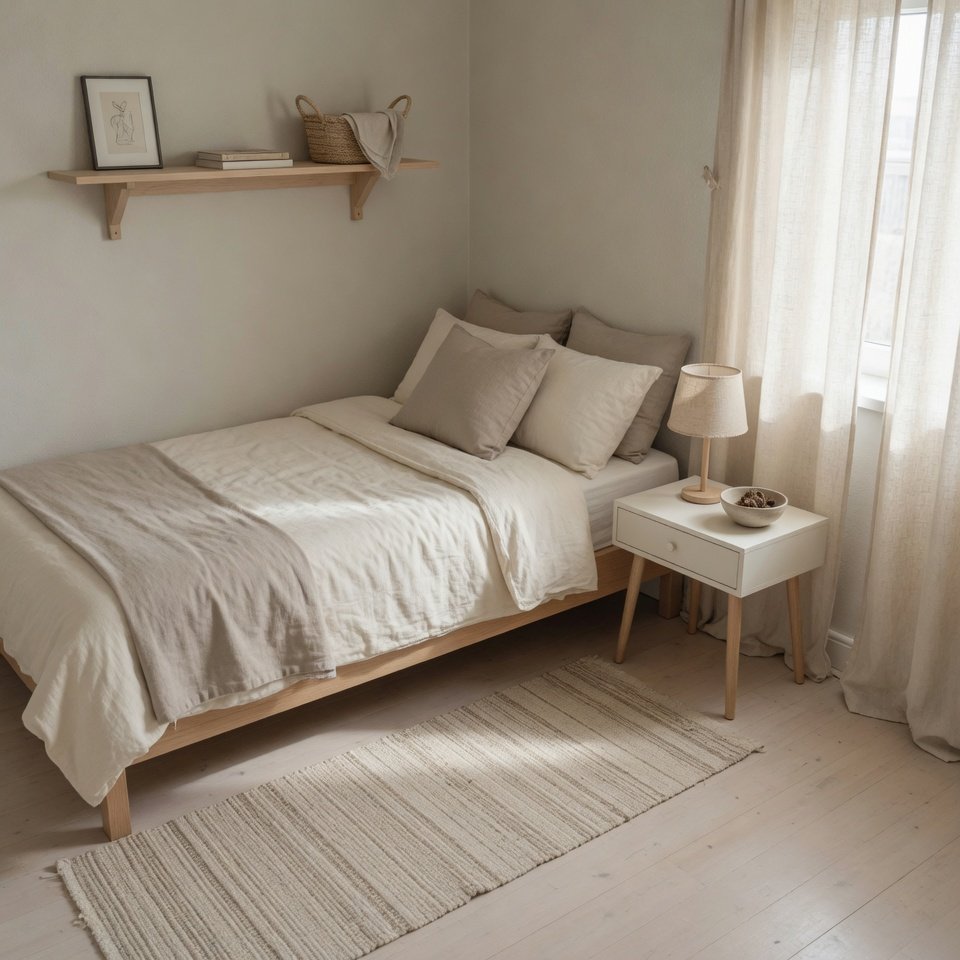
If the bedroom feels crowded, go visually lower. A low bed frame, shorter nightstands, a single floating shelf, and art hung with a little breathing room can make the ceiling feel taller.
This style works especially well with light bedding and simple window treatments.
Look for furniture with open bases or slim legs so the floor stays visible. That one easy change can make the room feel larger almost immediately.
Shop These First
When I want to refresh a small bedroom without changing everything, I start with the pieces that have the biggest visual impact.
Bedding comes first. Then lighting. Then one grounding layer like a rug, bench, or curtains.
Look for:
- a textured duvet or quilt in a soft neutral or earthy tone
- one lumbar pillow or two easy accent pillows
- a slim bedside lamp or plug-in sconce
- a washable rug with a faded pattern
- light-filtering curtains that add softness without heaviness
- a narrow nightstand with one drawer or shelf
- a woven basket for extra blankets or everyday storage
- simple art with enough scale for the wall
These pieces do a lot of work in a small bedroom because they add comfort and shape at the same time.
Style Notes
The easiest small bedroom updates are usually the quiet ones.
Repeat one material a few times so the room feels connected. That might be light oak, black metal, brushed brass, or soft linen. Keep your palette narrow enough to feel calm, but not so strict that the room loses warmth.
Try not to crowd every surface. A small bedroom does better with one nice lamp, one framed piece, and one tray or bowl than five little accessories competing for attention.
And scale matters more than people think. Oversized furniture can make a compact room feel squeezed, but pieces that are too tiny can look temporary. Aim for furniture that feels slim, not undersized.
Layering Ideas
Layering is what makes a bedroom feel finished.
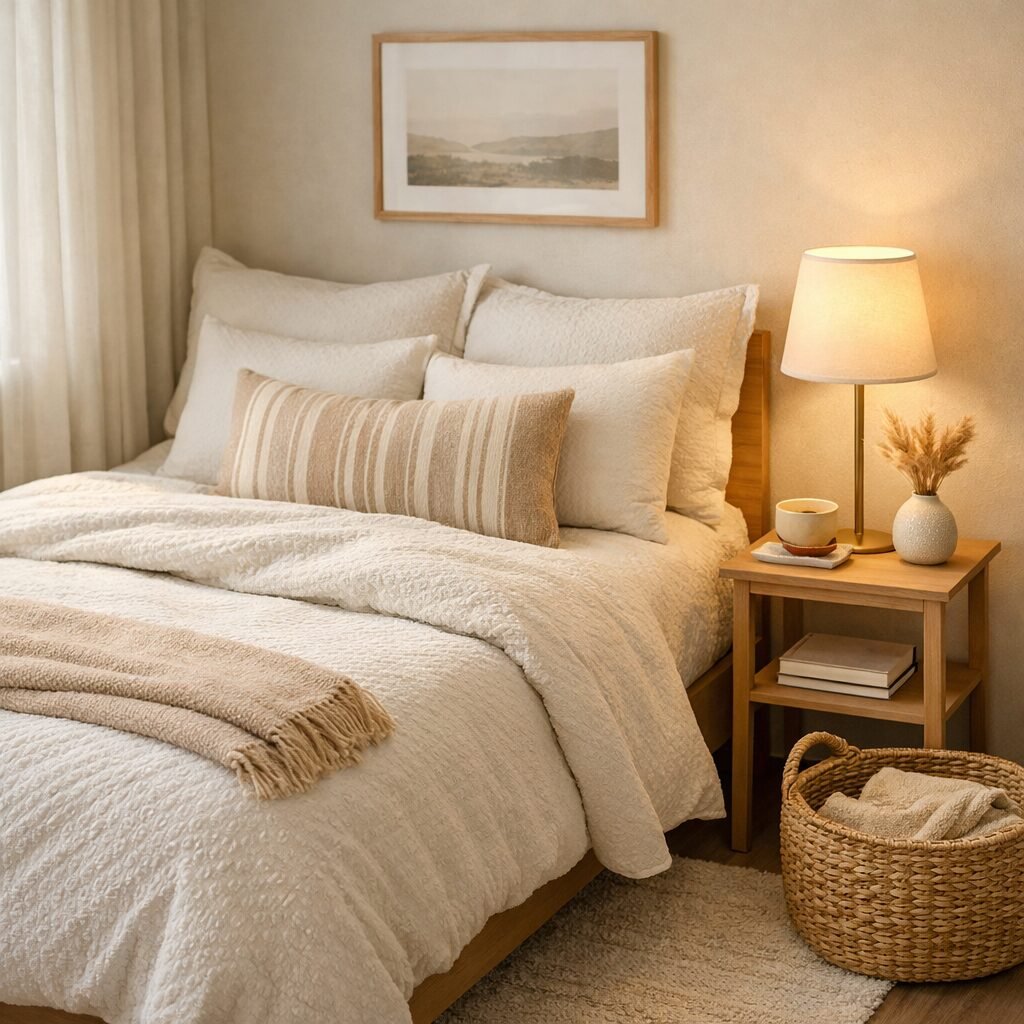
Start with the bed. Use sheets, then a duvet or quilt, then a folded throw at the foot if you have room. Add sleeping pillows first, then one decorative layer like a lumbar or a pair of soft accent pillows.
Around the bed, bring in a few more soft edges. Curtains with a little puddle or gentle break. A rug that reaches beyond the bed frame. A fabric shade on the lamp. A bench with upholstery or a woven basket with a blanket spilling out just slightly.
Wall layering helps too. Instead of filling every wall, choose one area to give attention to. That might be a larger artwork over the bed, a leaning mirror, or a pair of small sconces framing the headboard.
Why this works
Layering adds warmth and depth without needing extra furniture. In a small space, that is often the difference between basic and cozy.
Soft close
A fresh bedroom does not have to be dramatic. Sometimes it is just a better lamp, softer bedding, a little contrast, and fewer things on the nightstand.
That is enough to change the feeling of the whole room.
Small bedrooms respond really well to thoughtful details. A simple swap in color, texture, or scale can make the room feel calmer, prettier, and easier to live in every day. And that kind of comfort tends to last.