
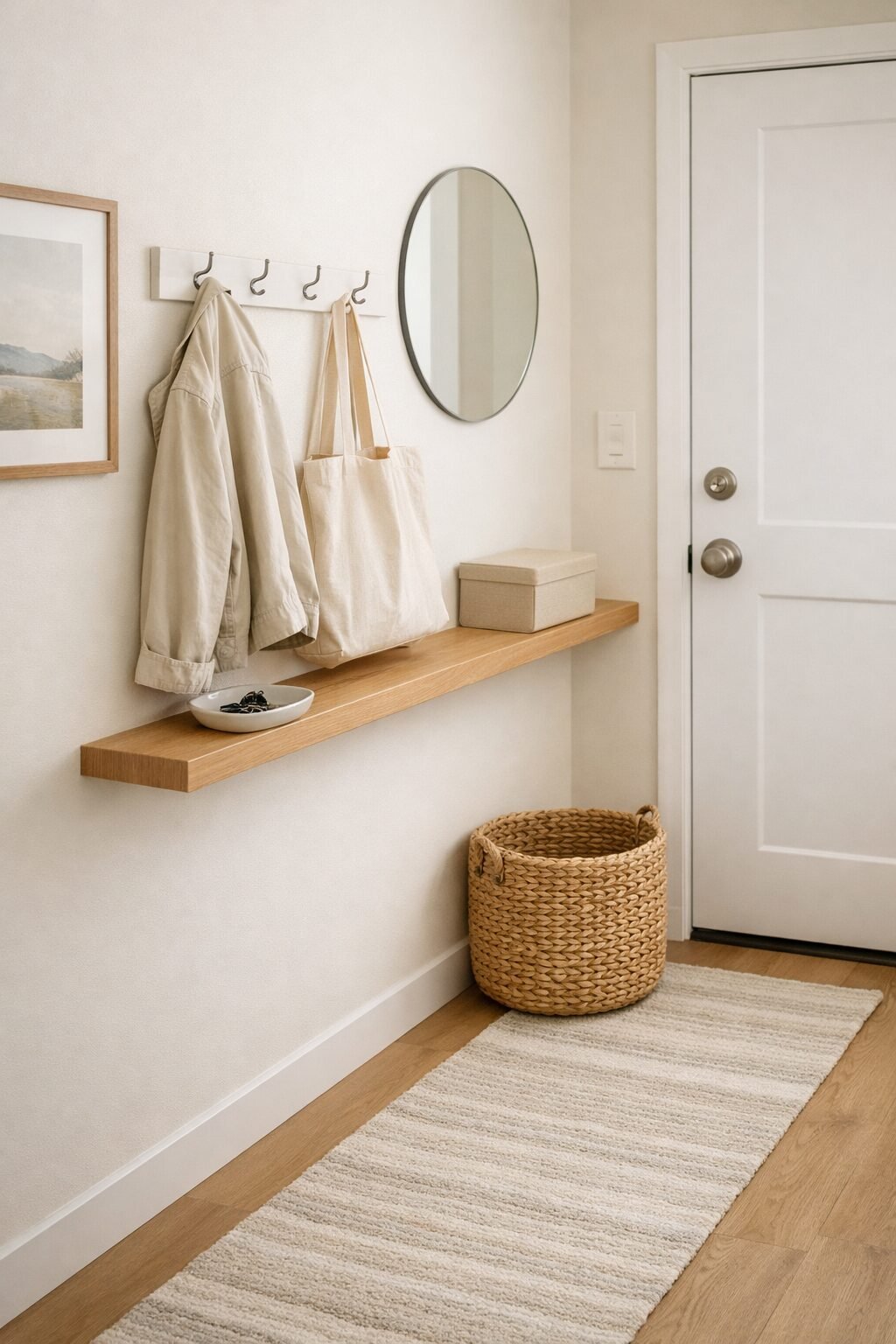
The Quick Way to Set Up a Tiny Entryway
*This post may contain affiliate links for which I earn commissions.*
A tiny entryway does not need much to work well. A few smart pieces, a simple routine, and one clear place for the everyday essentials can make the whole area feel calmer almost immediately.
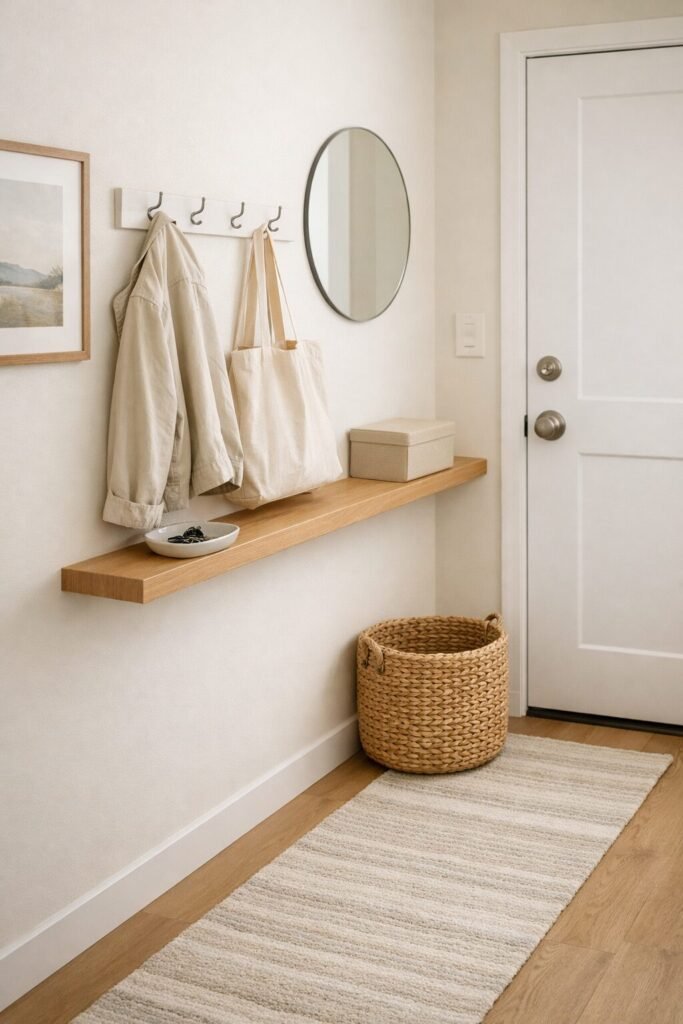
The goal is not to create a picture-perfect drop zone. It is to make coming home easier.
Even the smallest patch of wall can do that.
Tools Needed
You do not need a full furniture setup to make a tiny entryway useful. Most of the time, a few basics are enough:
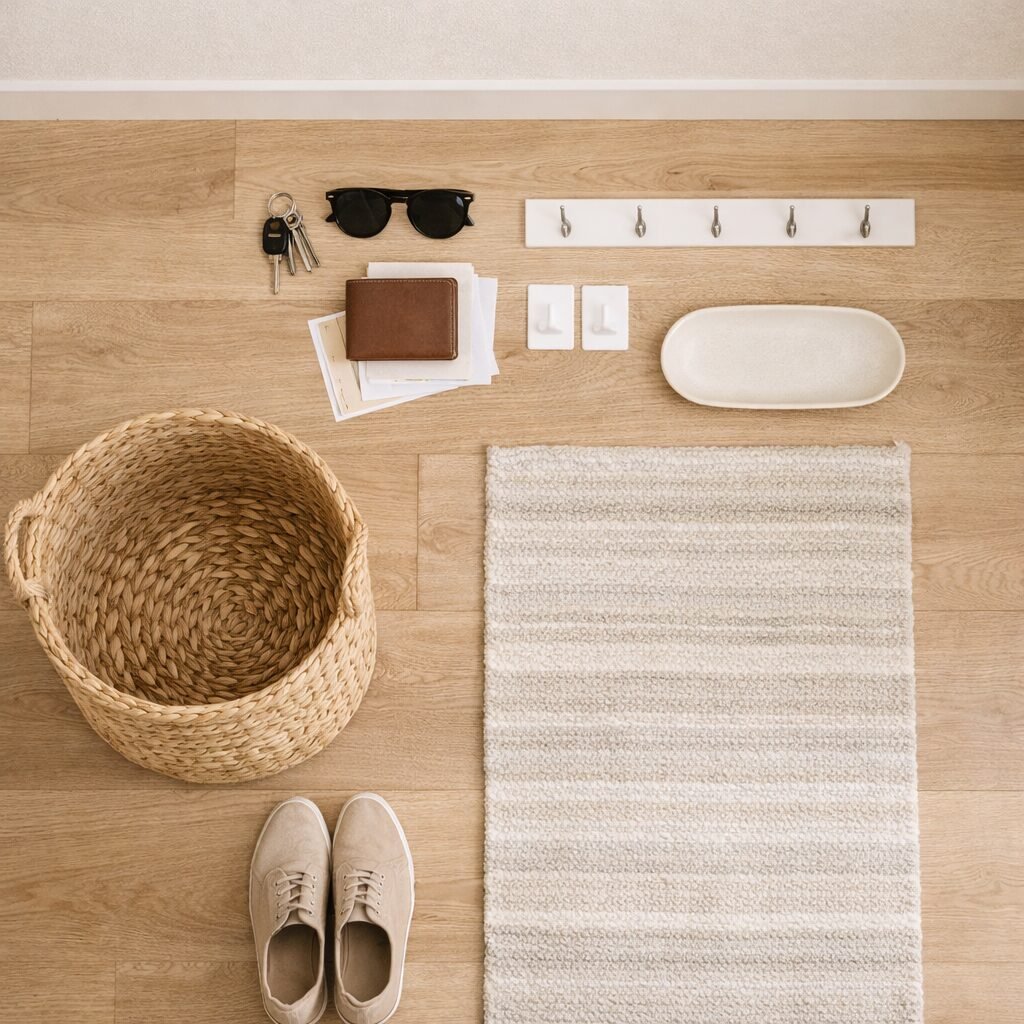
- a small wall hook, rail, or over-the-door hook
- a narrow basket, bin, or tray
- a slim rug or mat
- a small shelf, ledge, or tabletop surface if there is room
- a mirror if you want the area to feel a little lighter
- adhesive strips or renter-friendly hanging hardware if needed
If your entry is really just a strip of wall beside the door, that still counts. A hook, a tray, and a floor basket can go a long way in a small space.
The Simple System
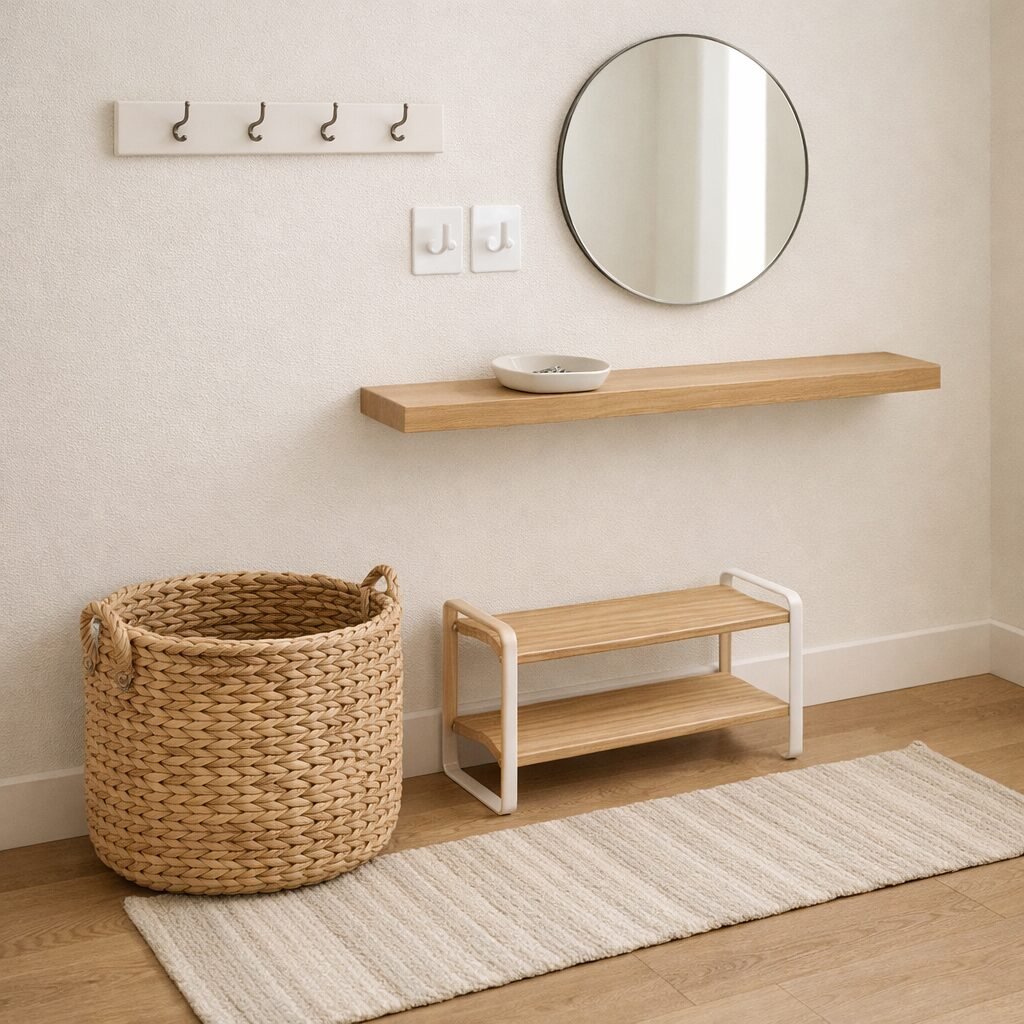
The easiest way to set up a tiny entryway is to keep it to three zones:
hang
for jackets, bags, or keys
drop
for wallet, mail, sunglasses, or small daily items
hide
for shoes, umbrellas, dog gear, or the things that get messy fast
That is the whole system.
If each category has one clear home, the entryway stays usable without needing much room. This is especially helpful in apartments where the front door opens right into the living room or kitchen. You want the area to feel tidy quickly, not like a pileup spot.
Why this works: a tiny entryway gets overwhelmed when it tries to hold too many types of storage. Three simple jobs keep it clear and easy to maintain.
Step-by-step
1. Clear the area completely
Take everything out of the entry zone first. Shoes, bags, random boxes, old mail, all of it.
Wipe the floor and wall if needed so you are starting fresh. This makes it much easier to see what space you actually have, even if it is only a few feet wide.
2. Decide what really needs to live there
Only keep the items you use right when you leave or come home.
Usually that means keys, one or two bags, light outerwear, shoes you wear most often, and maybe a small catchall for mail. Anything else can live somewhere nearby instead of right at the door.
This is where tiny entryways usually get overloaded. They end up holding everything instead of just the daily essentials.
3. Add one hanging solution
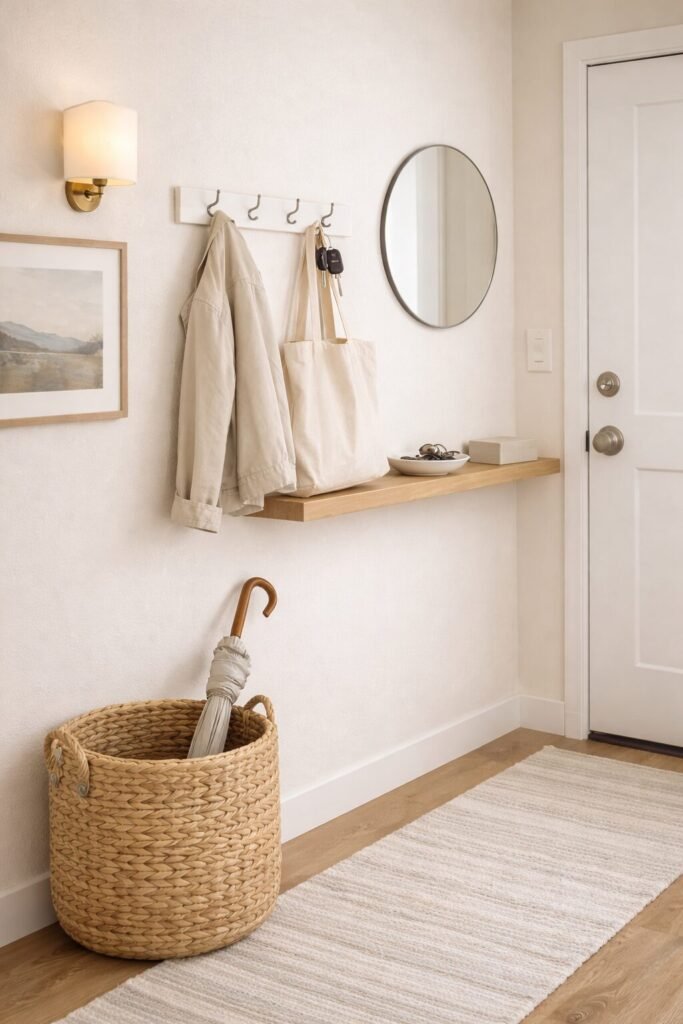
Start with the vertical space. A wall hook rail, two individual hooks, or an over-the-door hook instantly makes the area more functional without using floor space.
Keep the number limited. In a small entry, too many hooks can look cluttered fast. Aim for enough room for your main bag, a jacket, and maybe one extra item.
Why this works: getting bags and outerwear off the floor makes the entry feel cleaner right away.
4. Create one drop spot
Next, give the small loose items a place to land. This could be a narrow shelf, a tiny wall ledge, the top of a slim cabinet, or even a shallow tray on a nearby console.
Use it for keys, sunglasses, lip balm, headphones, and unopened mail if needed.
The tray matters more than it seems. It visually contains the little things so they do not spread across every available surface.
5. Add hidden or low-profile shoe storage
Shoes are often what make a tiny entryway feel messy first. A low basket, a slim shoe rack, or a lidded bin can help keep them under control.
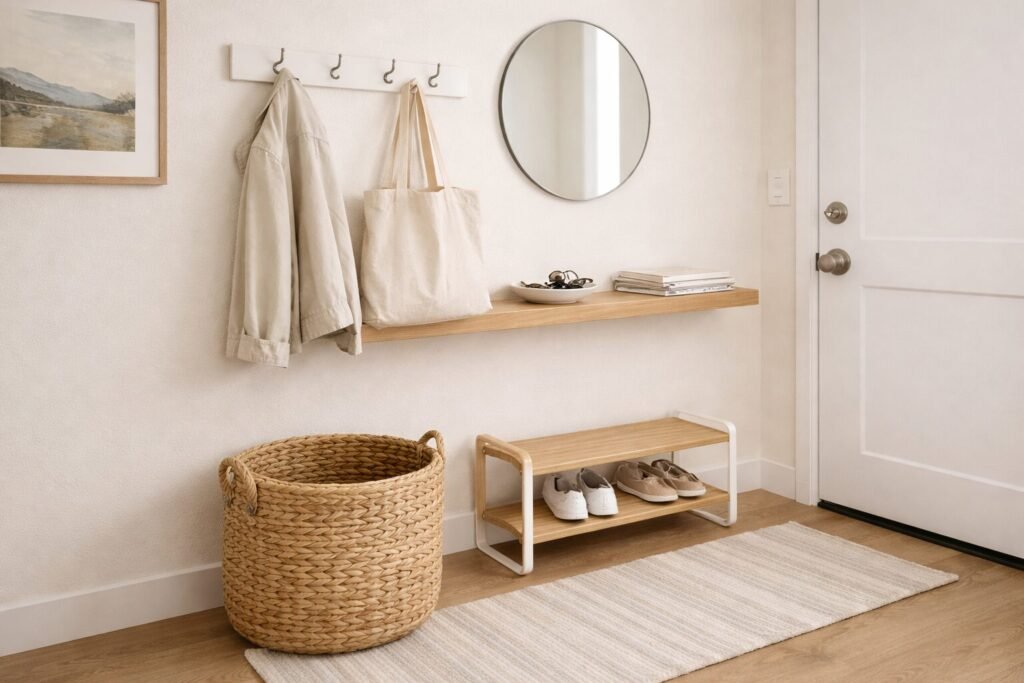
Try to store only the pairs you are actively wearing this week. Off-season shoes can go in a closet or under the bed.
If the entry is visible from the living room, a woven basket or wood-toned shoe rack usually feels softer than plastic storage.
6. Ground the area with a rug or mat
Even a very small rug helps define the entry zone. It catches dirt, softens the look of the floor, and makes the setup feel intentional.
Look for something narrow, washable, and low-profile so the door clears easily. Natural tones, soft patterns, or darker warm neutrals tend to hide wear while still feeling cozy.
This is one of those easy changes that makes the room feel more finished.
7. Use one mirror or visual anchor
If there is wall space, add a small mirror, framed print, or simple sconce nearby. This step is optional, but it helps the entryway feel like part of the home instead of a leftover corner.
A mirror is especially useful in a small apartment because it bounces light and makes the area feel a little more open.
Keep it simple. One piece is enough.
8. Finish with a five-minute reset habit
The fastest way to keep a tiny entryway working is a quick daily reset. Hang the bag up, put keys back in the tray, straighten the shoes, and toss junk mail before it spreads.
That habit is what makes the system stick.
Honestly, the setup itself is the easy part.
Helpful Tools
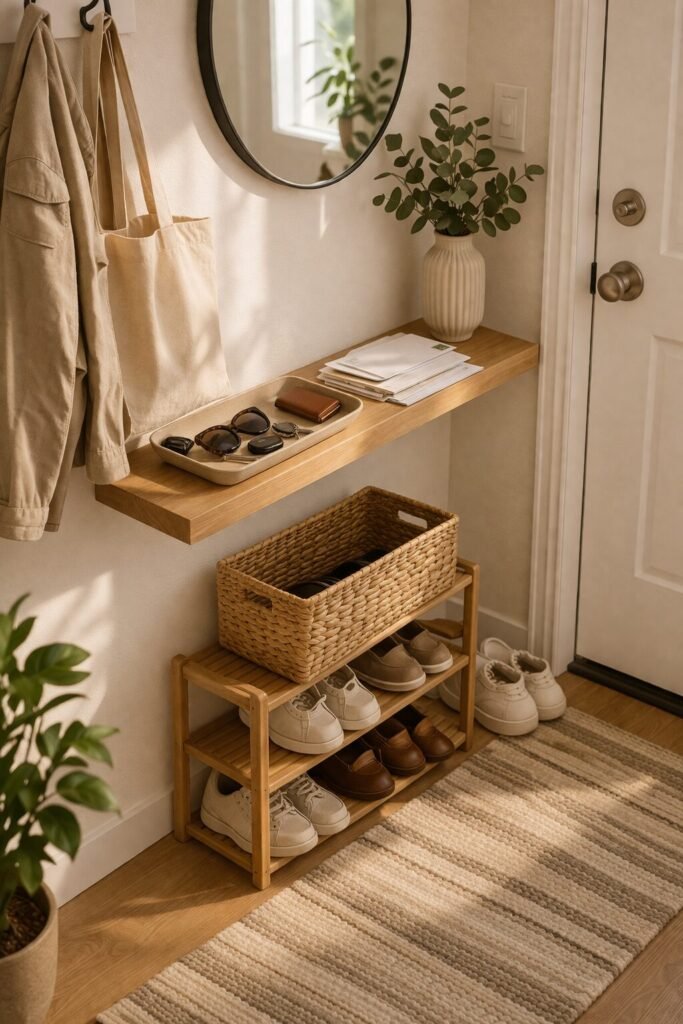
A few extra pieces can make a tiny entryway feel smoother to use, especially if the space has to work hard.
Look for:
- a narrow shoe rack with a small footprint
- a tray or catchall dish for keys and pocket items
- a wall-mounted hook rail
- a basket for shoes, scarves, or dog supplies
- a slim mirror
- a small bench with storage if you have the depth
- adhesive hooks for renter-friendly walls
- a washable runner or entry mat
If you want an easy option, start with a hook rail, a tray, and one basket. That combination covers most tiny entryway needs without crowding the space.
Shortcuts
If you need to set this up fast, these shortcuts help:
Use one basket instead of multiple containers
A single medium basket is often enough for shoes or grab-and-go items. Too many small bins can make the area feel busier.
Choose wall storage before floor storage
In a small entry, using the wall first keeps the floor clearer and the whole space easier to clean.
Limit what stays by the door
Keep only your current daily items in the entryway. This one rule solves a lot.
Pick double-duty pieces
A mirror with hooks, a bench with storage, or a shelf with a hanging rail gives you more function without needing more room.
Match tones where you can
A few coordinated finishes, like black hooks, warm wood, and a natural fiber basket, make the setup feel calmer and more intentional.
Why this works: tiny spaces feel better when they are simple to read. Fewer shapes and finishes create less visual noise.
Quick close
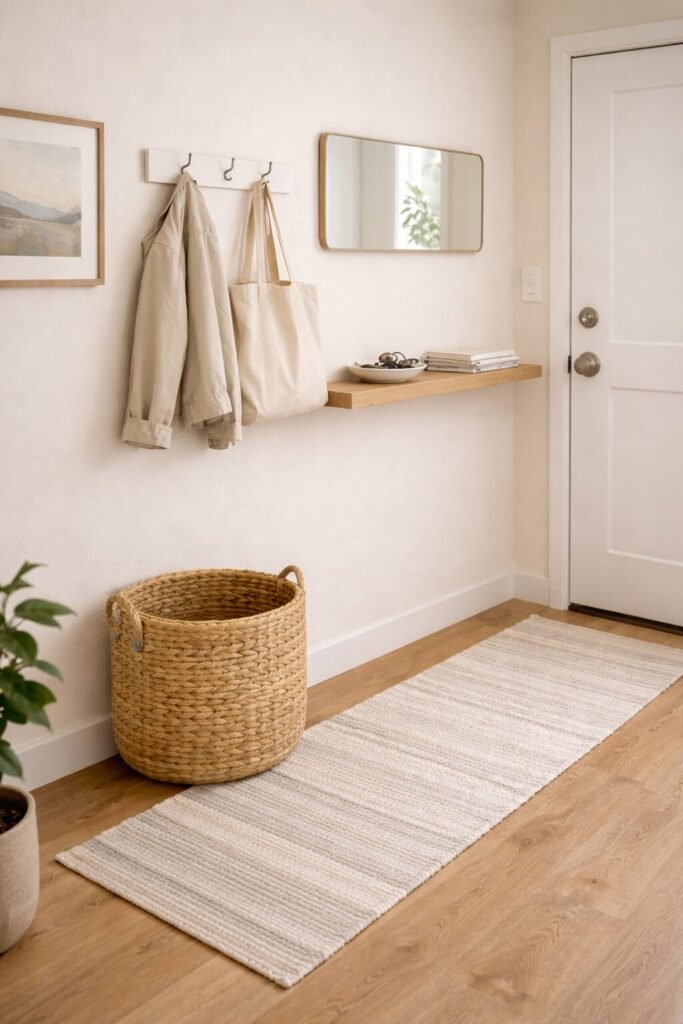
A tiny entryway does not need a complicated setup to work well. It just needs a place to hang, a place to drop, and a place to hide the messier things.
Start there and keep it simple.
A hook, a tray, and a basket can change the whole feel of the area. And in a small home, that kind of quick order makes a big difference the minute you walk in the door.