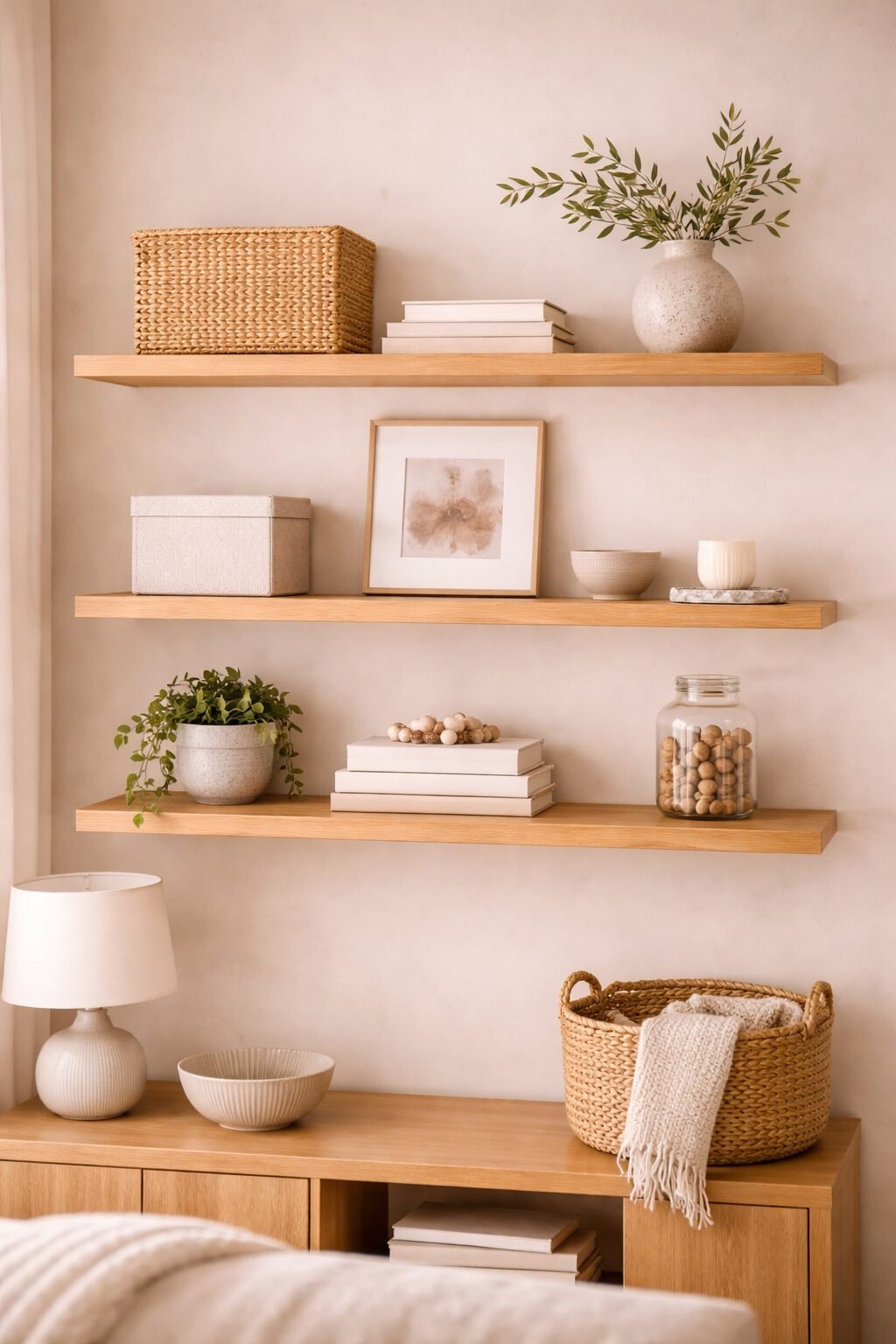
A Beginner-Friendly Guide to Styling Open Shelves
*This post may contain affiliate links for which I earn commissions.*
Open shelves can feel a little intimidating at first. You clear everything off, stand back, and suddenly the whole thing looks much barer and much bigger than it did before.
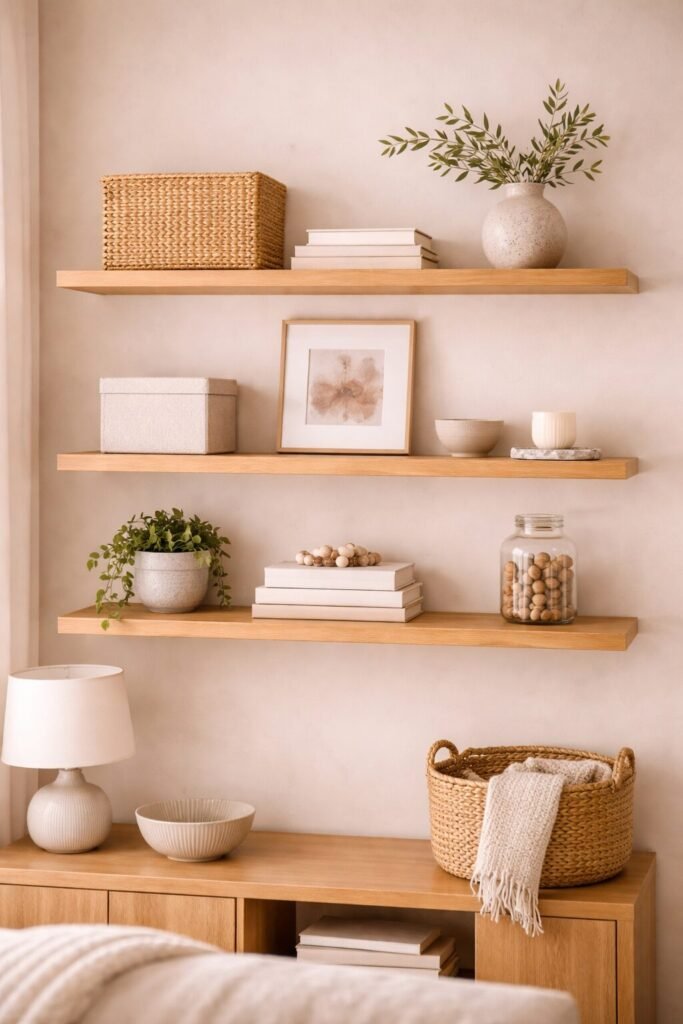
Here’s the good news. Styling open shelves is not about making them look perfect. It is about making them feel calm, useful, and a little bit personal. Once I stopped treating shelves like a display table in a store, the whole process got easier.
A few simple choices can make a shelf feel balanced without looking stiff.
What You’ll Need
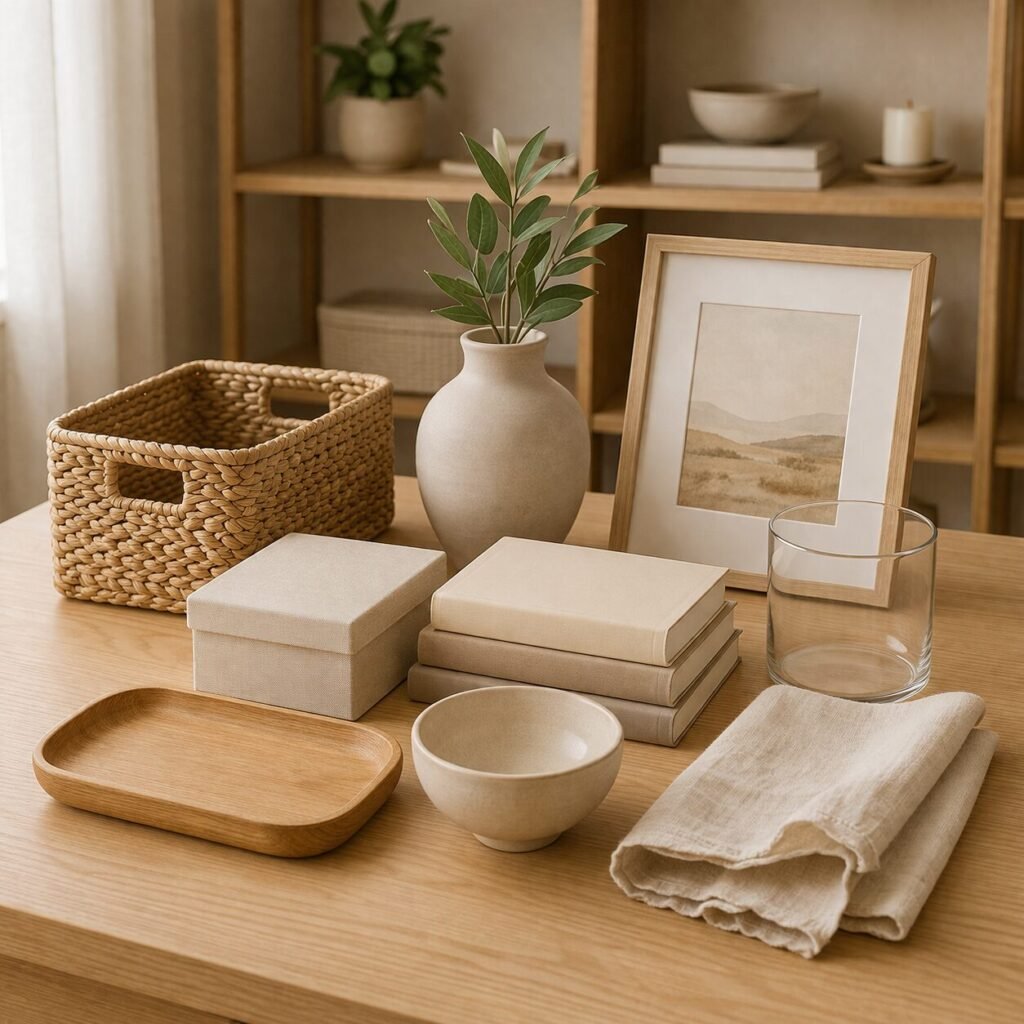
You do not need a big decorating budget for this. A few basics go a long way, especially in a small space where every shelf is easy to notice.
Start with:
- a mix of practical items you already use
- 2 to 4 decorative objects
- a small stack of books
- one plant or branch in a vase
- a basket or box for hidden storage
- a bowl, tray, or lidded container
- a framed print or small piece of art
- a soft cloth for dusting while you work
Try to gather pieces in a few repeating tones so the shelves feel connected. Warm white, black, wood, glass, and soft green are an easy mix. If your room already has brass, oak, or matte black finishes, echoing those details on the shelves makes the whole setup feel more settled.
Prep Tips
Before you start arranging anything, take everything off the shelves.
I know, it looks worse before it looks better.
This step matters because it helps you see what you actually have instead of trying to work around random clutter. Wipe the shelves down, then group your items into simple categories: books, storage pieces, natural elements, practical everyday items, and decor.
Here’s what helps most during prep:
Choose a loose color palette
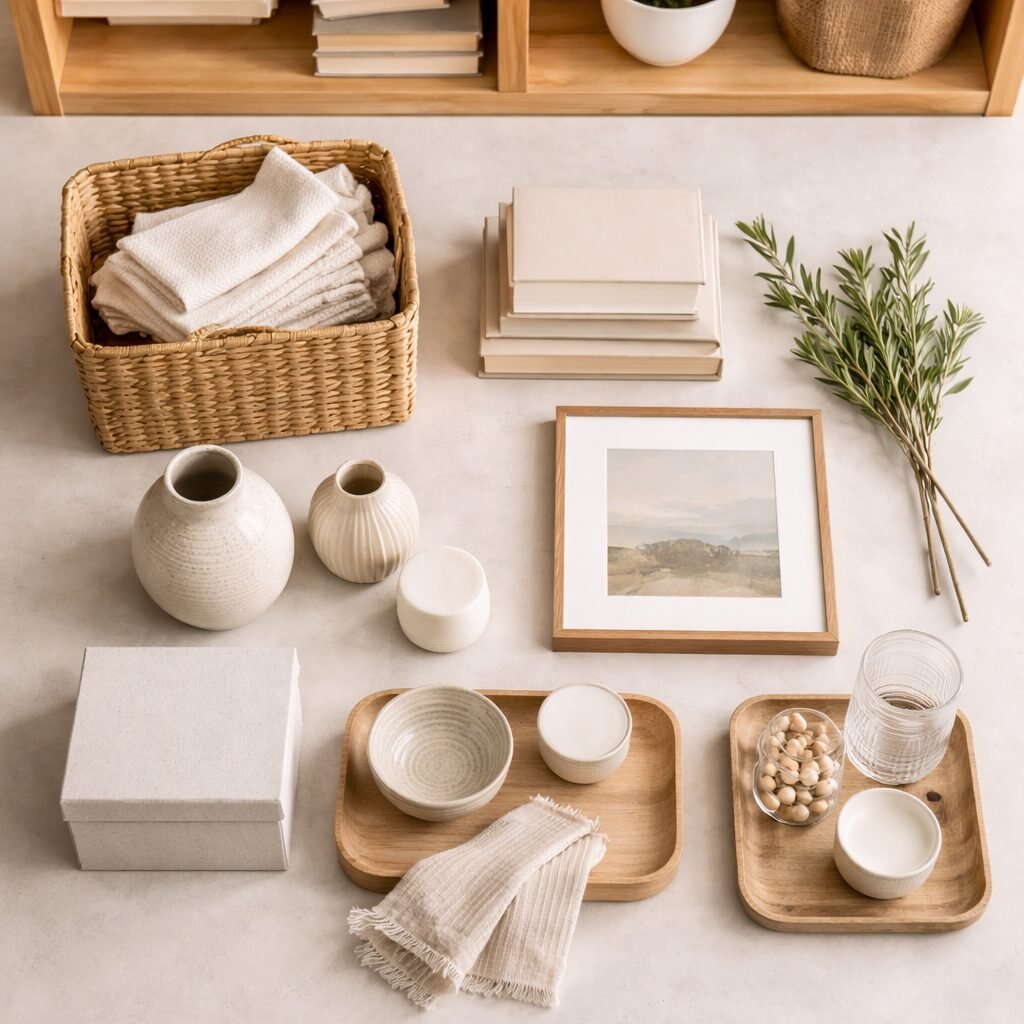
You do not need everything to match, but it should feel related. Two or three main tones are usually enough. For example, white ceramics, light wood, and muted green can make a shelf feel soft and cozy without trying too hard.
Keep function in the mix
Open shelves work best when at least some of the objects are useful. A stack of bowls in a kitchen, folded towels in a bathroom, or baskets in a living room keeps the styling from feeling fake.
Edit harder than you think
Lay out more than you need, then remove a few pieces. Shelves almost always look better when they have breathing room.
Vary heights and shapes
If everything is the same height, the shelf feels flat. Mix tall, medium, and low objects so your eye moves around naturally.
Steps
1. Start with your biggest items first
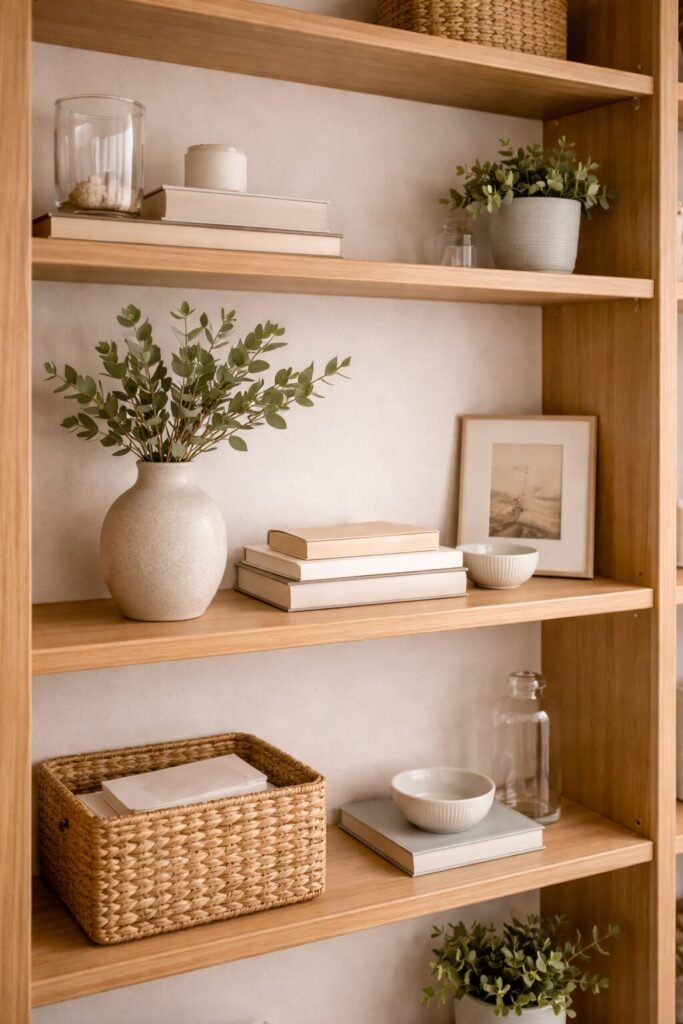
Place the largest pieces on the shelves before anything else. This might be a basket, a framed print, a large bowl, or a tall vase.
These anchor pieces create structure.
Spread them out so they are not all sitting on one side or all lined up at the same height. If you have three shelves, try placing one larger item on each shelf in a slightly different position. That gives the arrangement a more natural rhythm.
2. Add practical pieces next
Now bring in the items you actually use. On open shelves, these could be mugs, dishes, canisters, folded linens, or office supplies in containers.
This is where the shelf starts to feel lived-in.
The trick is to make practical items look intentional. Stack dishes neatly. Fold towels the same way. Place small loose items inside a basket or lidded box. A shelf feels calmer when everyday things are grouped instead of scattered.
Why this works
Useful items add honesty to the display. In a small space, that balance matters because decorative-only shelves can start to feel like visual clutter.
3. Layer in books
Books are one of the easiest tools for shelf styling. Use a short stack horizontally, then place a small object on top if it fits. You can also stand a few books upright with a bookend or heavier object beside them.
Choose books with colors that work with the room if you can. Neutral spines, soft blues, earthy greens, or warm tan covers are especially easy to blend into a cozy shelf.
If the covers are very bright and distracting, turning a few books around can create a softer look. Just do not do every single one or it starts to feel too staged.
4. Bring in one natural element
Every shelf looks better with something organic. A trailing plant, a little olive branch, eucalyptus stems, or even a simple branch clipped from outdoors can soften the harder lines of shelves, frames, and boxes.
This is one of those easy changes that makes the room feel more relaxed.
If you do not want to deal with plant care, a good faux stem in a ceramic vase still adds shape and softness. In tiny apartments, even one green note can make a shelf feel fresher.
5. Use the rule of visual triangles
This sounds more formal than it is. All it means is placing items so your eye moves in a gentle triangle shape from one object to another.
For example, you might have:
- a tall vase on the left
- a medium stack of books in the center
- a small bowl on the right
That rise and fall keeps the shelf from looking flat. You are creating a little landscape instead of a straight line of objects.
When I am styling shelves, this is the part where things usually start clicking.
6. Leave empty space on purpose
Not every inch needs to be filled. In fact, shelves usually look better when some space is left open.
This can feel strange at first, especially if you are used to using every bit of storage. But open space gives the eye a place to rest. It also makes your favorite pieces stand out more.
In small homes, that breathing room is part of what keeps a room from feeling crowded.
Why this works
Negative space makes shelves feel lighter, cleaner, and more intentional. It helps each object look chosen instead of squeezed in.
7. Add one personal piece
Once the basics are in place, add something that feels like you. A framed photo, a candle you actually love, a handmade bowl, or a travel keepsake can do the job.
You only need one or two personal touches.
This is often what stops open shelves from looking like a catalog page. And honestly, that is usually the nicest part.
8. Step back and adjust
After everything is on the shelves, walk a few feet away and really look at them. Notice whether one side feels too heavy or whether too many small things are grouped together.
Make small shifts instead of starting over. Move one object higher. Swap a dark piece for a lighter one. Remove one item if the shelf feels busy.
Sometimes the last edit is the thing that makes the whole arrangement feel easy.
Optional Tools
You can style shelves beautifully with what you already have, but a few simple tools can make the process smoother:
- shelf liners if the surface is scratched or slippery
- museum putty for anything fragile
- risers or small boxes to add height under objects
- matching storage bins for hidden everyday clutter
- battery puck lights for darker built-ins
- a small level if you are hanging art near the shelves
If you want an easy option, matching baskets or lidded boxes are especially helpful. They hide the messy little things while still looking soft and tidy on display.
Mistakes + Fixes
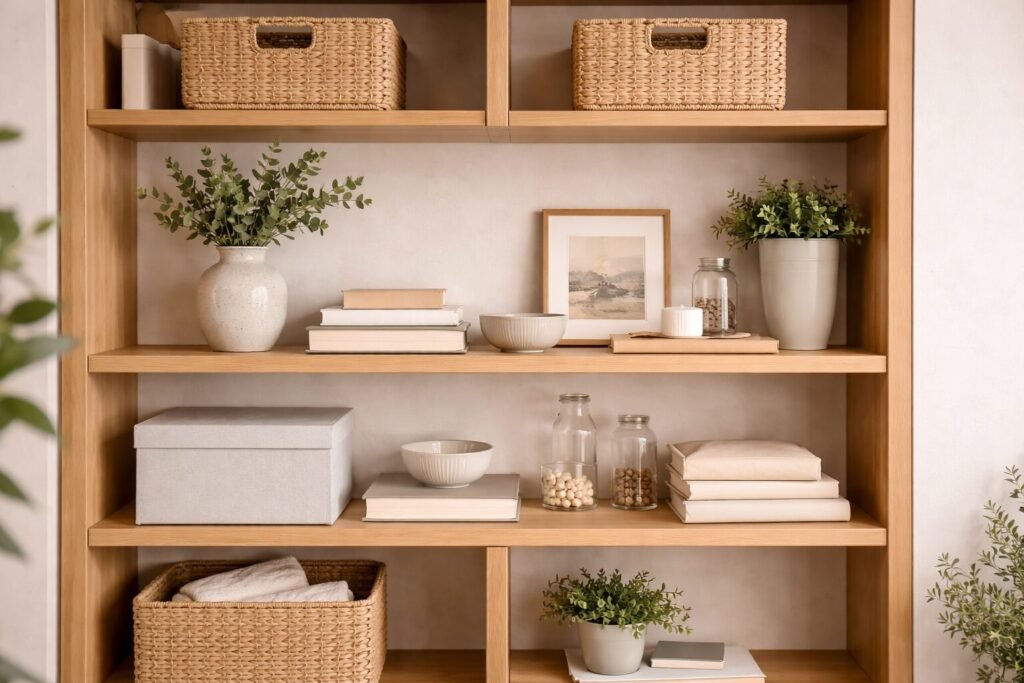
Mistake: Everything is the same size
When every object is short, round, or similarly sized, the shelf can look flat.
Fix: Add contrast with one tall vase, a stack of books, or a larger framed piece leaning at the back.
Mistake: Too many tiny objects
A bunch of little decor pieces can make shelves feel busy fast.
Fix: Group smaller items on a tray or replace several small pieces with one larger object.
Mistake: No closed storage
Open shelves are not ideal for every single item, especially in a small space.
Fix: Add one or two baskets or boxes so the shelves can still hold useful things without looking messy.
Mistake: Everything is centered
Perfectly centered objects on every shelf can feel stiff.
Fix: Shift some items off-center and vary where stacks, plants, and art are placed.
Mistake: The shelves look nice but not useful
This happens a lot when styling starts to lean too decorative.
Fix: Put back the items you actually reach for and arrange them with a little more care. A neat stack of bowls or folded linens can look just as pretty as decor.
Mistake: The shelf feels disconnected from the room
Sometimes the shelf itself looks fine, but it does not relate to anything nearby.
Fix: Repeat one or two materials or colors already in the room. That might be black metal, warm wood, glass, linen, or soft green.
Wrap
Open shelf styling gets easier once you stop aiming for perfect balance and start aiming for a shelf that feels calm, useful, and a little layered.
Start simple. Use what you have. Leave some room between pieces.
That is usually enough.
A few books, a basket, something natural, and one personal object can completely change how a shelf feels. And in a small space, those small shifts matter. They make the room feel lighter, more organized, and more like home.