Get the Look: Warm Minimalism for a Small Living Room
*This post may contain affiliate links for which I earn commissions.*
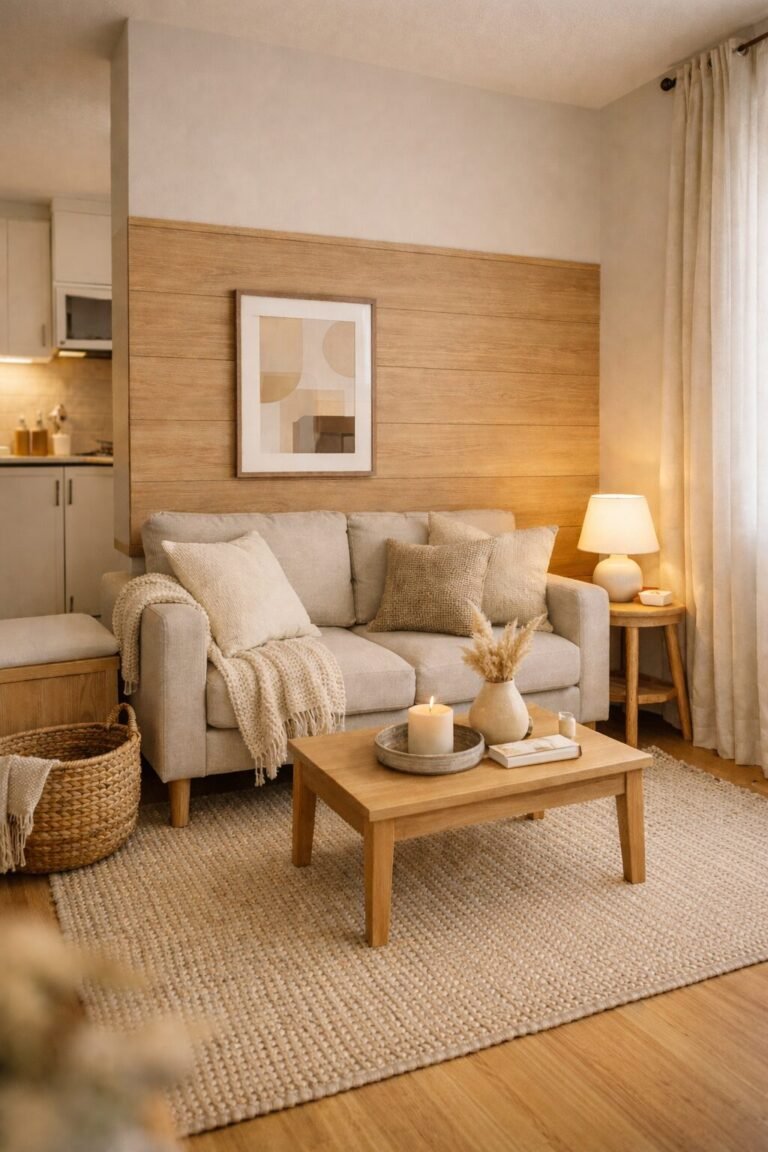
Late afternoon light, a soft cream sofa, pale wood underfoot, one warm lamp glowing in the corner. The room feels quiet right away. Nothing is shouting for attention, but it still feels finished. There’s texture, a little contrast, and just enough warmth to keep minimalism from feeling cold.
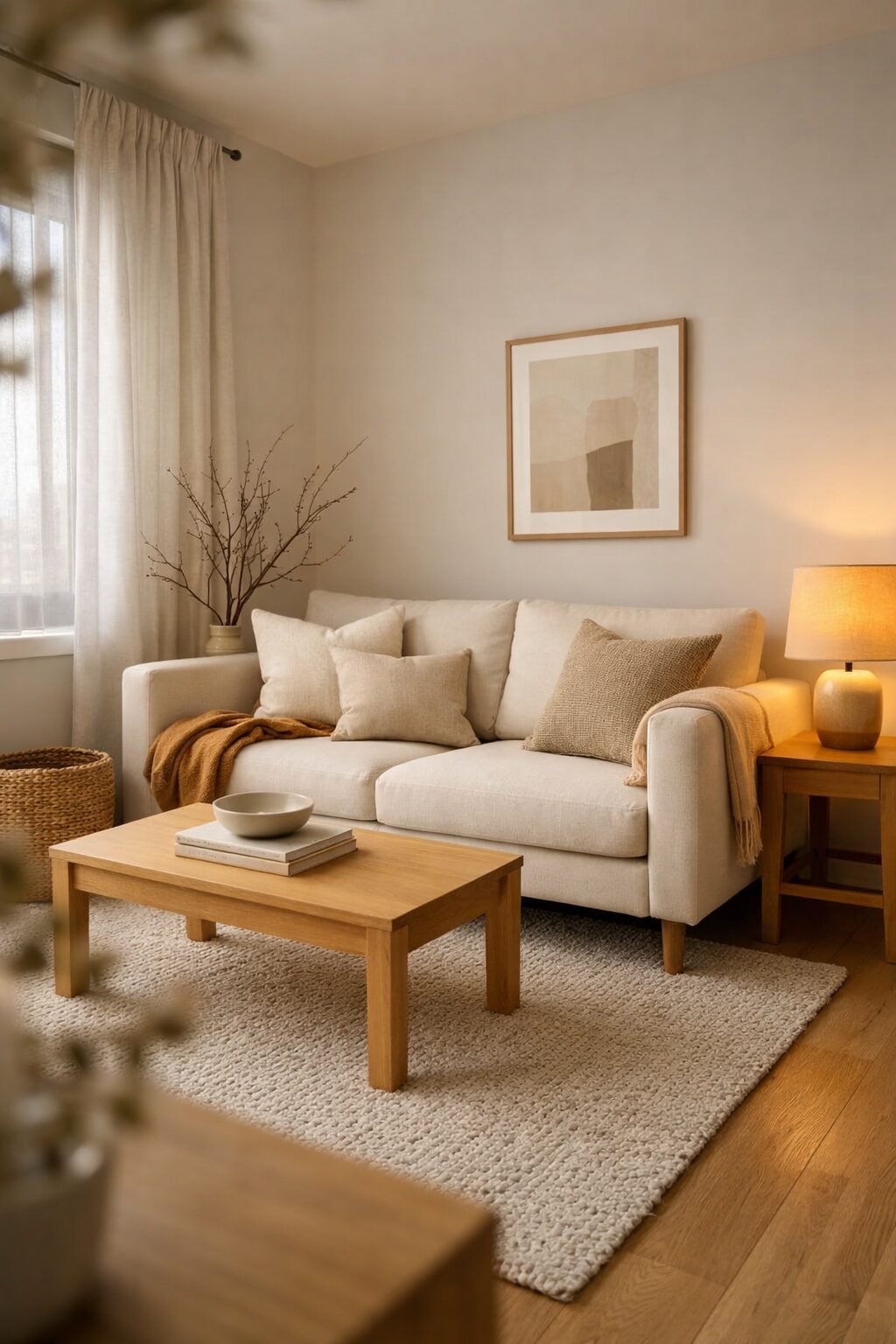
That balance is what makes warm minimalism work so well in a small living room.
It keeps the space open, but not empty. Calm, but still comfortable. And when every piece earns its place, the whole room feels easier to live in.
Base Layer
Start with the biggest surfaces first. In a small living room, the base layer matters because it sets the tone before you add a single decorative piece.
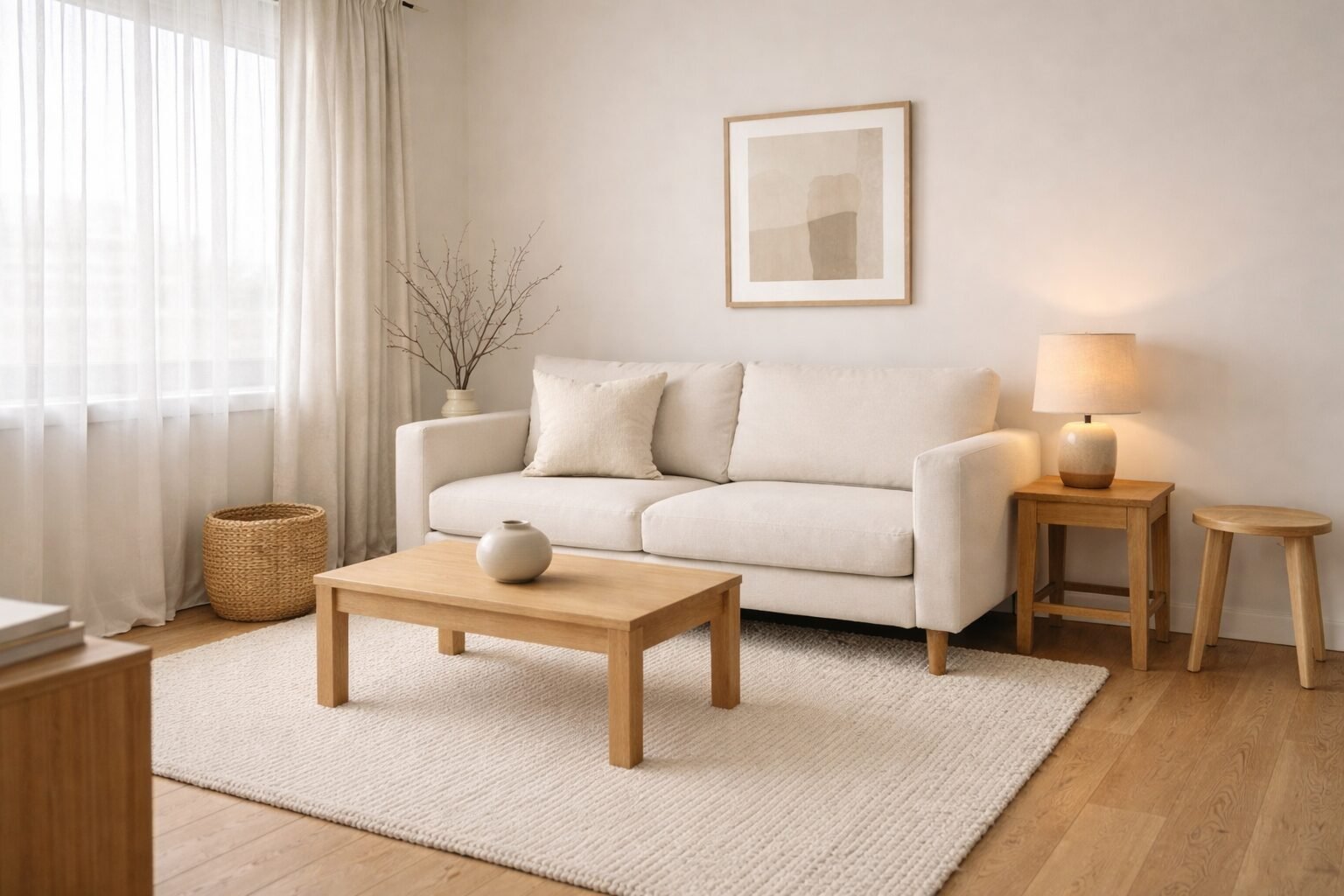
Look for a soft, light foundation:
a warm white or cream wall color, a beige or oatmeal sofa, light to medium wood tones, and simple shapes with clean lines. Avoid anything too glossy or overly ornate. Matte finishes and quiet textures make the room feel softer.
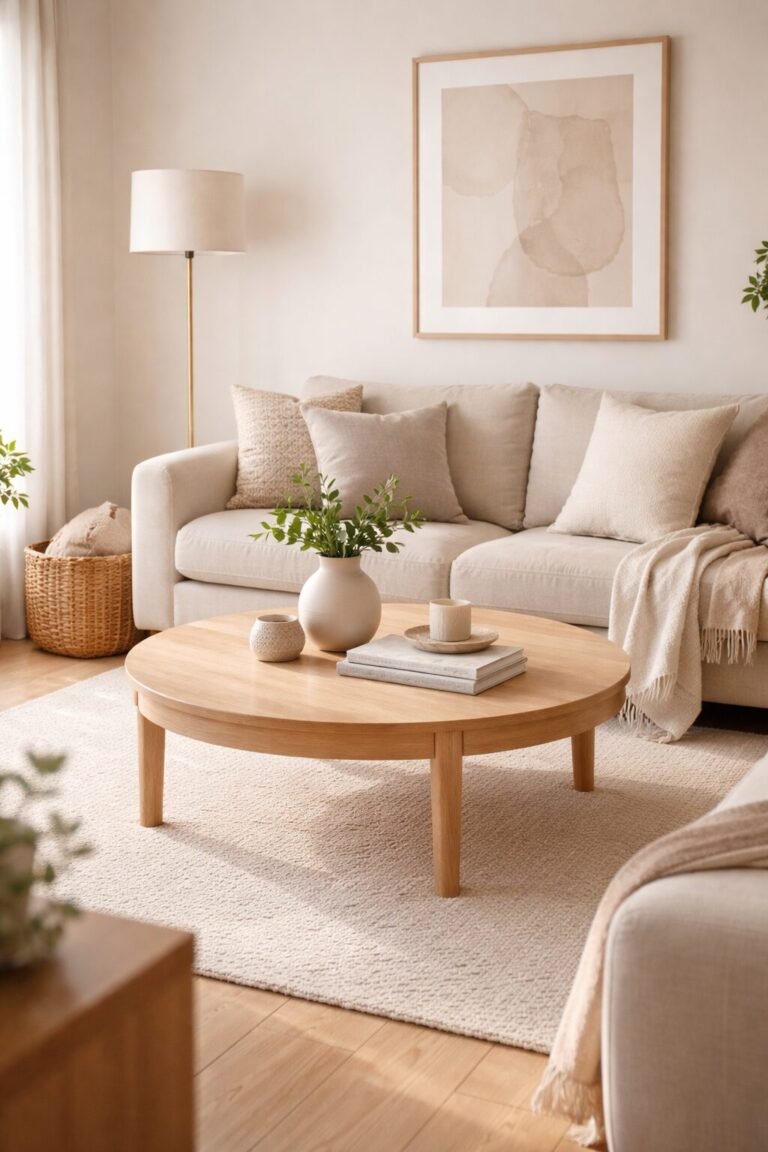
A low-profile sofa helps the room feel more open. A compact coffee table in oak, ash, or walnut adds structure without heaviness. If you have room for a rug, choose one with a subtle pattern or a tone-on-tone texture in cream, sand, or light taupe.
Why this works: a simple base makes the room feel larger, and the warm undertones keep it from looking stark.
If your living room already has darker flooring or a rental-friendly paint situation, you can still get this look. Use the larger movable pieces, like the rug, sofa, and curtains, to lighten the visual weight.
Texture + Warmth
This is where the room starts to feel lived in.
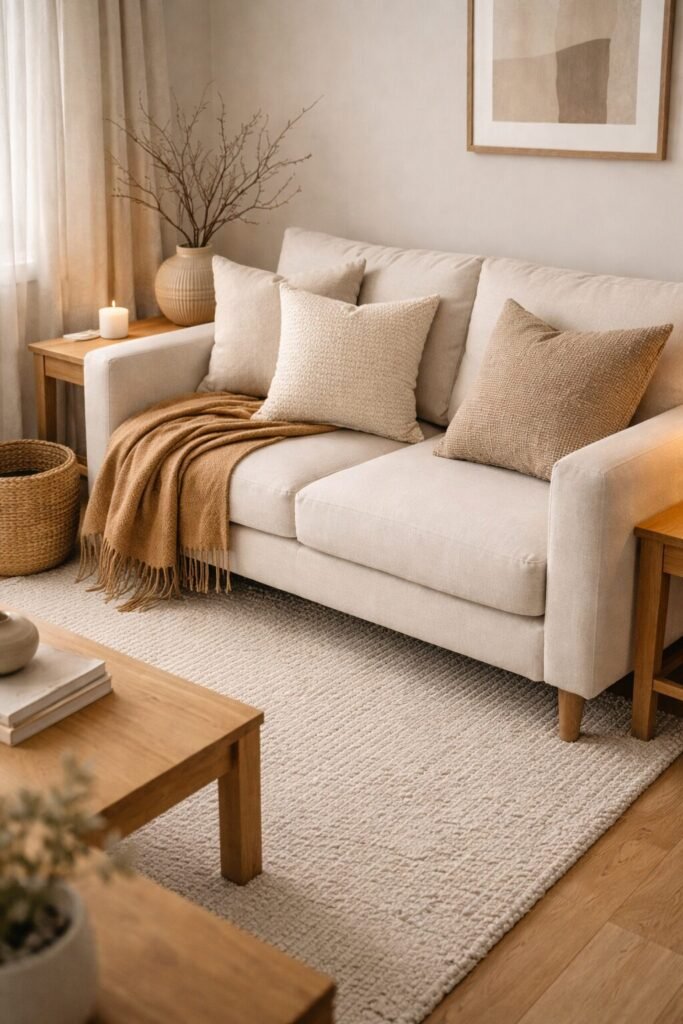
Warm minimalism depends less on color and more on texture. Instead of filling the room with lots of decor, you build comfort through materials. Think washed linen, soft cotton, boucle, light wool, woven baskets, ribbed ceramic, and natural wood grain.
On the sofa, layer two or three pillows in related tones instead of a matching set. A cream boucle pillow next to a flax linen one feels relaxed and intentional. Add a throw in a warm neutral shade like camel, oatmeal, or soft clay.
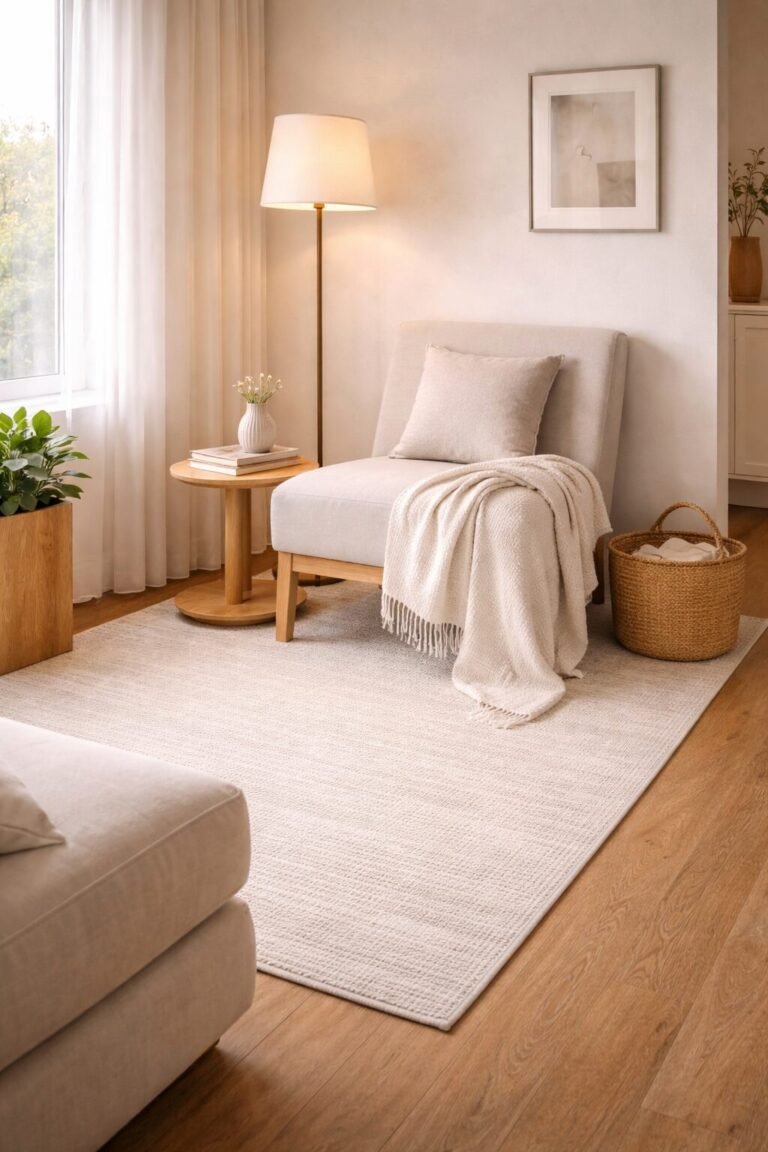
Window treatments can do a lot here too. Light-filtering curtains in a linen blend soften the room without making it feel heavy. Even one woven basket tucked beside the sofa can add that little bit of warmth that makes the room feel settled.
One easy change that helps right away is switching lighting. Warm bulbs, soft lamp shades, and a gentle glow make minimal rooms feel calmer by evening. It sounds small, but it makes a real difference.
Accent Pieces
Once the base feels calm and the textures are in place, add just a few accent pieces with care.
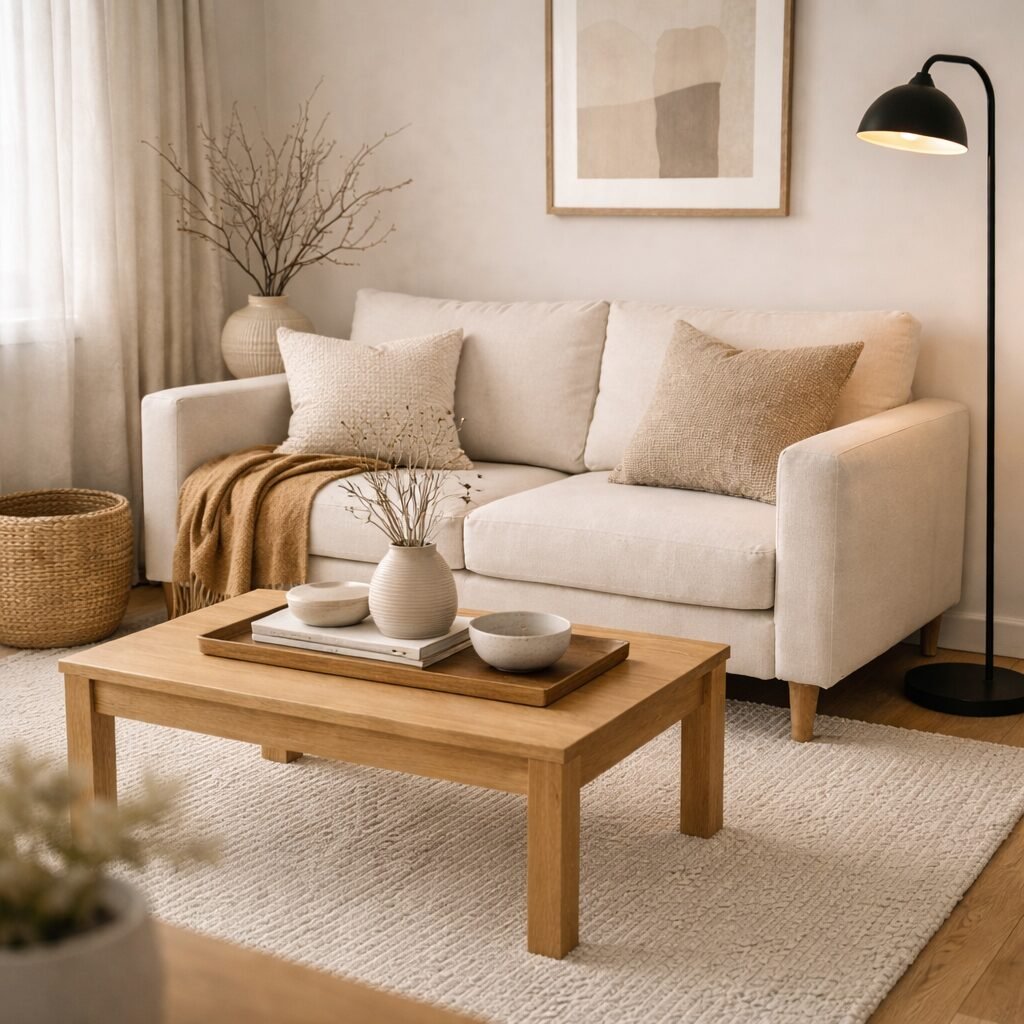
This look does not need much.
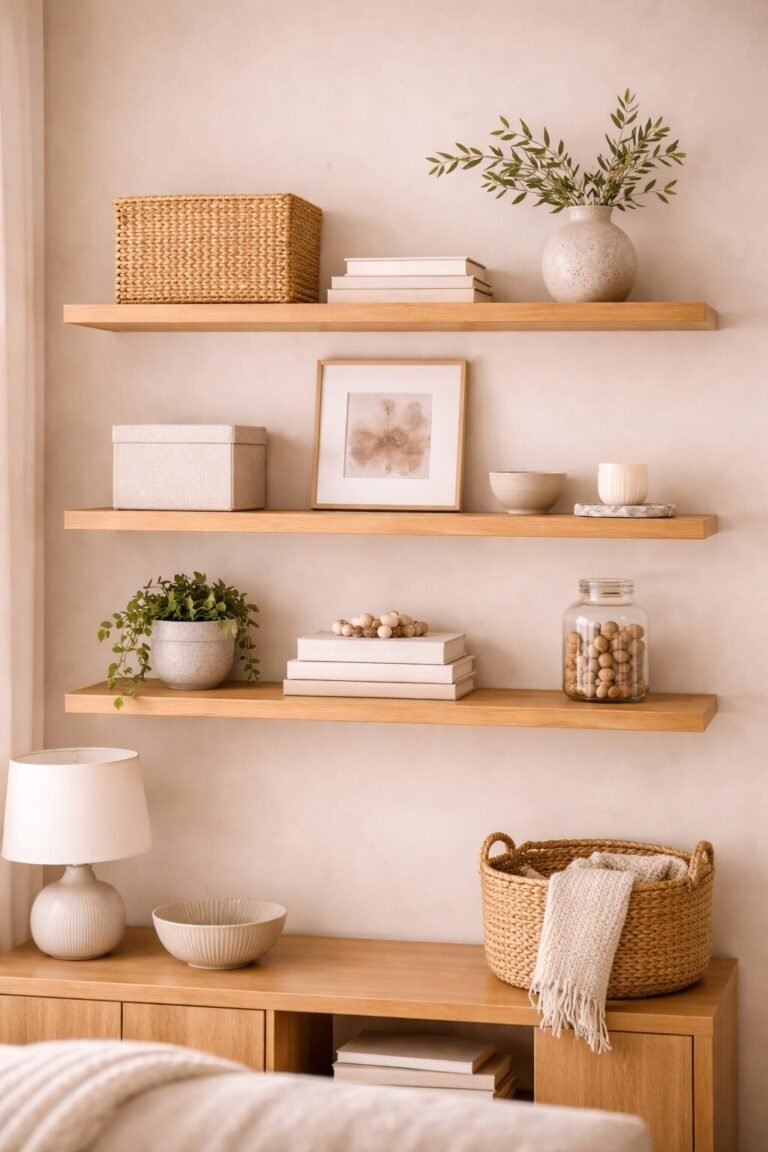
Choose pieces that bring shape, contrast, and a little personality without crowding the room. A black or aged bronze floor lamp can add just enough edge. A ceramic vase with branches brings in something organic. A coffee table tray, a stacked pair of books, or a low bowl can make the room feel finished without cluttering the surface.
Wall art works best when it feels quiet and grounded. Look for abstract prints, line drawings, or landscape pieces in soft earth tones, charcoal, faded green, or warm beige. A single larger piece often works better than a busy gallery wall in a small room.
Keep decorative accents slightly varied in height and material. A smooth ceramic object next to a woven basket or a wood tray creates contrast without noise.
Styling Tips
Keep your palette narrow. Warm minimalism looks best when the colors feel related. Cream, sand, oat, camel, walnut, muted olive, and soft black usually work beautifully together.
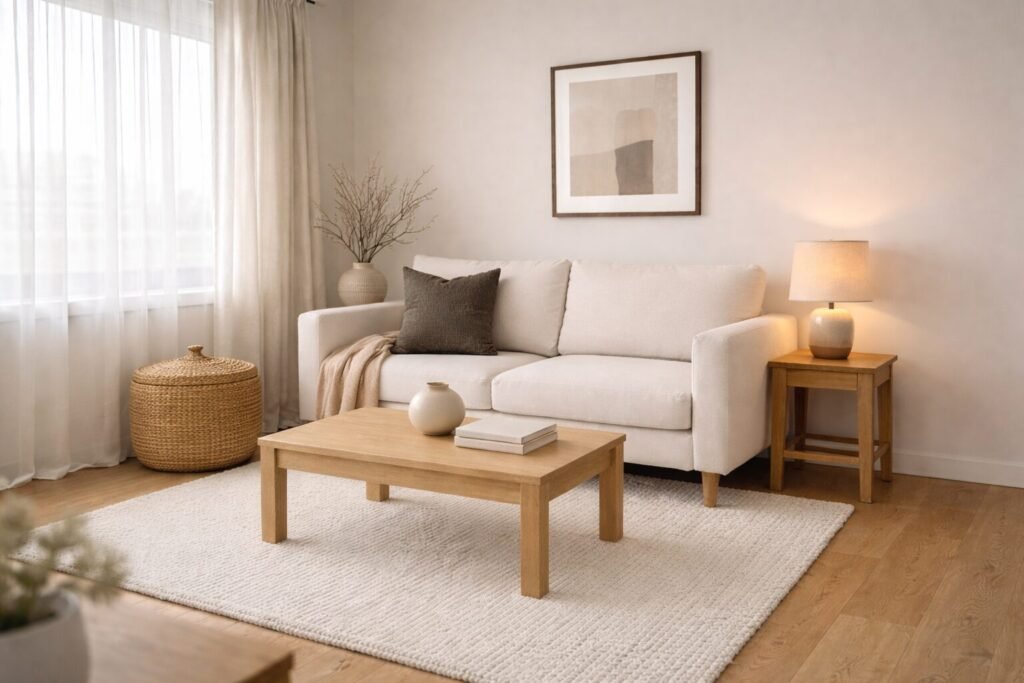
Let open space be part of the look. Not every corner needs something in it. In a small living room, breathing room makes the furniture and textures stand out more.
Use contrast carefully. If the whole room is pale, add one or two darker accents to anchor it. A black frame, dark wood object, or charcoal pillow can do the job.
Mix soft and structured shapes. A curved vase, a boxy sofa, a round bowl, and a slim rectangular coffee table keep the room from feeling flat.
Why this works: contrast in shape adds interest even when the palette stays calm.
Try to keep cords, remotes, and everyday clutter contained. Warm minimalism always feels better when the practical parts of the room are a little quieter. A lidded basket or small storage ottoman helps a lot with that.
Product Suggestions
If you want to build this look piece by piece, start with the items that have the biggest visual impact.
A simple choice is a compact sofa in a warm neutral fabric. From there, add a textured rug, one soft throw, and lighting with a warm glow. Those three things can shift the whole mood of the room.
After that, look for:
A wood coffee table with a clean shape
This helps ground the room and adds natural warmth.
Textured pillow covers in soft, tonal colors
Boucle, linen, or brushed cotton all work well here.
A woven basket or closed storage piece
Especially useful in a small space where you need the room to look calm and function well.
A ceramic vase or sculptural bowl
These add softness without asking for much space.
A floor or table lamp with a linen or matte shade
Lighting is a huge part of this look, especially at night.
A quiet piece of wall art
Look for something with soft contrast rather than bright color.
You do not need all of it at once. Warm minimalism usually comes together best through a few thoughtful additions instead of one big shopping sweep.
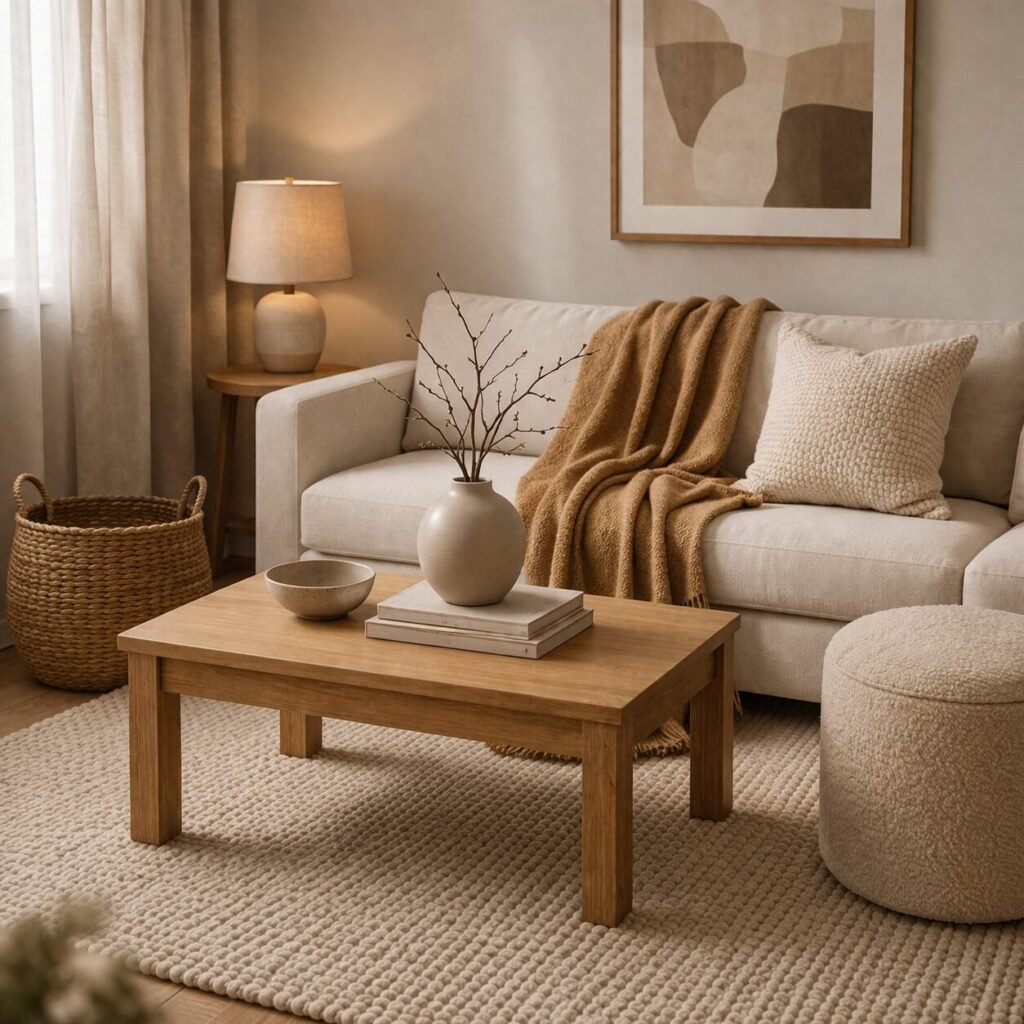
Soft close
A warm minimal living room should feel like a place where you can breathe a little easier. Soft textures, natural materials, and a restrained palette help the space stay open, even when square footage is limited.
Start with the foundation, add warmth through texture, and keep the accents simple.
That is often enough.
A small living room does not need more things to feel finished. It just needs the right mix of calm, comfort, and intention.